America’s Late-Dynasty Moment: China’s Cycles of Decline and Renewal May Reveal the USA Political Future.
As Americans grow weary of political extremism, China’s dynastic history offers a timeless reminder: legitimacy, not force, decides our nation’s fate.
A Crisis of Faith at the Heart of Democracy
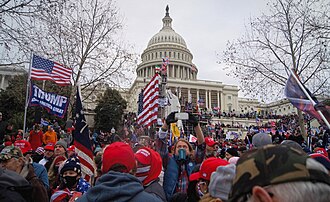
As the United States approaches another anniversary of its founding, many Americans sense that something deeper than politics is at stake. Extremism, particularly on the far right, has tested the boundaries of democratic resilience. Yet history shows that periods of moral exhaustion are not new—they are often the prelude to renewal.“Societies rarely collapse from without. They erode from within—when legitimacy dies faster than leadership can adapt.”
Across two millennia of Chinese history, dynasties rose and fell in rhythmic cycles, each collapse clearing the ground for reform. In that rhythm lies a lesson for our America.
The Mandate of Heaven or the People’s Mandate?
In ancient China, political change was explained through the Mandate of Heaven the belief that rulers governed only as long as they acted with virtue and justice. When corruption or cruelty prevailed, Heaven’s favor was withdrawn, and rebellion followed.
As historian Ray Huang wrote in 1587, A Year of No Significance, decline was never simply decay; it was correction. In modern democracies, Heaven’s will is replaced by the people’s consent. Our “mandate” is civic trust—the collective moral authority that sustains governance. When leaders abandon decency, it is the people, not Heaven, who withdraw that favor.
Ming: Moral Absolutism and Paralysis
The Ming dynasty (1368–1644) began as a populist revolution led by a peasant-turned-emperor. It promised virtue and justice after Mongol rule. But by the 1600s, the Ming court was crippled by corruption and ideological infighting.
Historian John Dardess described late-Ming politics as “a theater of moral competition,” where officials competed to display righteousness rather than to solve problems. Bureaucratic paralysis followed.“Factions of righteousness proved as corrosive as the corruption they denounced,” Dardess wrote.
The Ming collapsed not from invasion alone, but from a loss of connection with its people.
Today, America’s far-right populism shows similar symptoms: moral fervor turned rigid, ideological purity replacing empathy. As in the Ming’s final years, self-righteousness has begun to hollow out governance itself.
Qing: Resisting Change in a Changing World
Two centuries later, the Qing dynasty (1644–1911) faced a different crisis: global disruption. Foreign powers, industrial revolutions, and internal inequality demanded reform. Instead, the court clung to nostalgia. Historian Immanuel Hsudescribed it as “paralyzed by reverence for tradition and fear of reform.”
Even populist uprisings like the Boxer Rebellion (1899–1901), which sought to expel foreign influence, devolved into violence that hastened the dynasty’s fall. The tragedy of the late Qing was not moral collapse—it was the refusal to evolve.“Change deferred becomes collapse deferred,” wrote one Qing reformer. “When Heaven sends warning, the wise adapt; the proud perish.”
America’s challenge today echoes this late-Qing moment: facing rapid globalization, automation, and demographic transformation, some cling to a mythic past rather than engage with a complex future. But history shows that survival belongs to those who adapt, not to those who retreat.
Renewal and the Resilience of Civilization
Each time a dynasty fell, China endured. The early Qing restored order after Ming collapse; the reformers of the nineteenth century fused tradition with modernity. As historian Joseph Levenson wrote in Confucian China and Its Modern Fate, Chinese civilization “transformed decay into renewal.”
So too has America done, time and again. Civil war, depression, and social upheaval have all preceded renewal. The nation’s capacity for self-correction is its most enduring strength. “The republic has not survived because it is perfect,” one might say, “but because it is capable of moral repair.”
Beyond Extremes: The Mandate Restored
In dynastic China, legitimacy rested on harmony between ruler and ruled. When that harmony fractured, Heaven’s favor moved on. In America, legitimacy depends on the bond between people and principle—the democratic mandate.
Today, voters and citizens across the spectrum are signaling exhaustion with outrage and a hunger for honesty, inclusion, and steady leadership. That may be the beginning of renewal: the people reclaiming the moral mandate of democracy.
If the United States is, indeed, in a “late-dynasty moment,” then it is not the end of an era—it is the start of one.