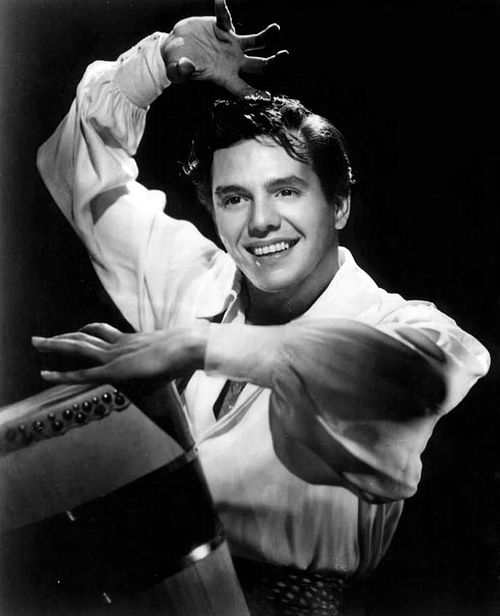
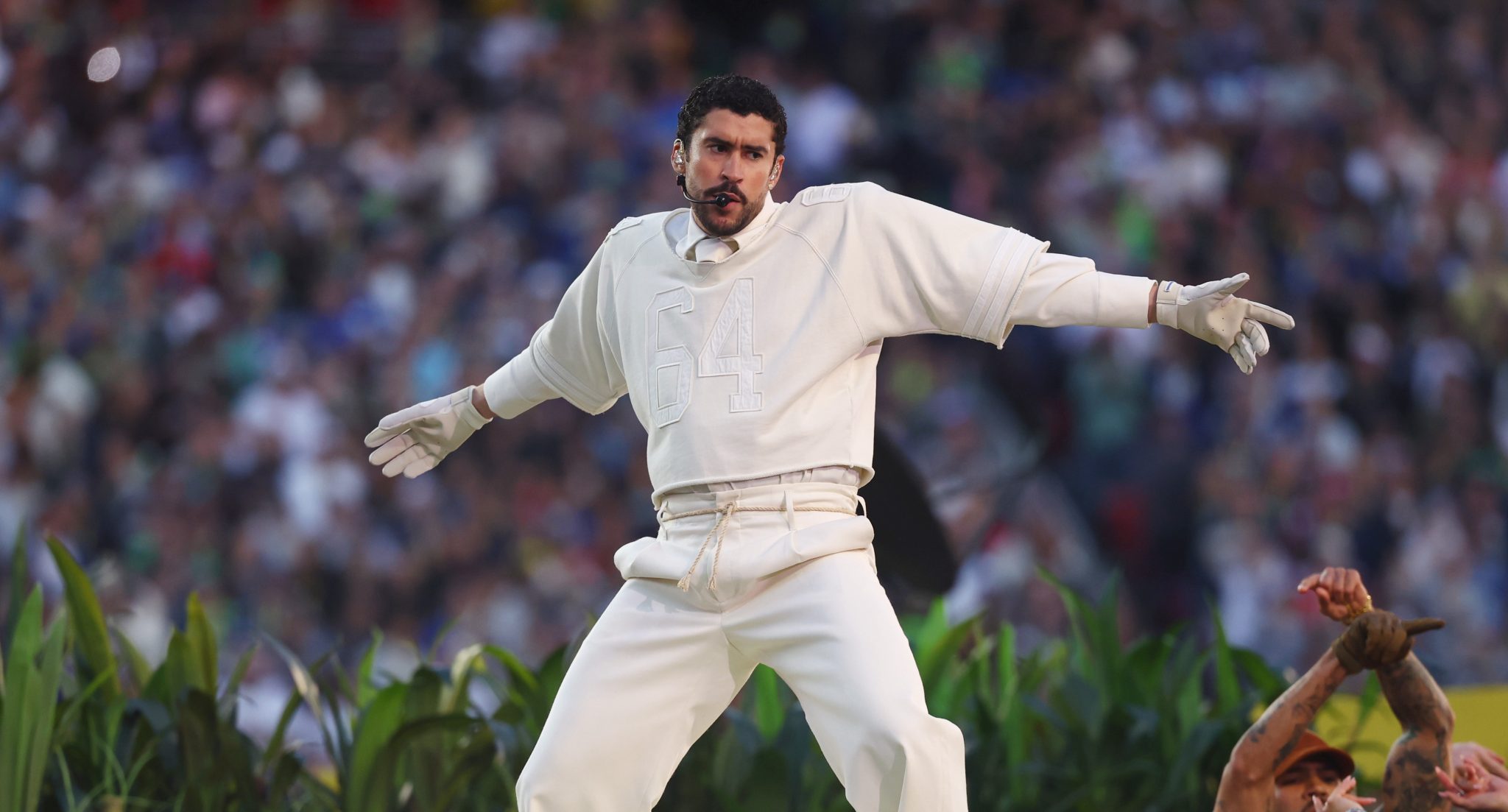
This isn’t only about Desiderio Alberto Arnaz y de Acha, or Benito Antonio Martinez Ocasio, as individual icons.
It’s about recurring cultural tension in America around visibility, language, and power when Latino identity has moved from the margins to center stage.
The Historical Pattern: Visibility → Celebration → Backlash
Desi Arnaz, aka Ricky Ricardo, wasn’t just a performer; he was a Cuban immigrant producing and starring in the most influential sitcom in American history. What made him controversial?
- He spoke with an accent.
- He played a visibly Latino character.
- He insisted on casting his real-life wife, Lucille Ball, and portraying an interracial marriage at a time when that was radical.
- He maintained cultural references to music, rhythm, and identity.
America loved him, but only after CBS executives initially resisted because they feared audiences wouldn’t accept a Cuban husband.
When Latino identity is visible but “contained,” it’s charming. When it becomes central and unapologetic, it creates anxiety.
Then the Latin explosion brought us Ricky Martin, Jennifer Lopez, Shakira, and Marc Anthony.
At first: Celebration, but issues about authenticity, overexposure, “Are they crossing over?”
The phrase “crossing over” implies that mainstream America is the destination, but Latino culture is somewhere outside it.
Super Bowl 2020 ushered in Shakira and J-Lo. Celebrated globally. Criticized domestically as " politically ethnic.”
Same pattern. Language as Power Language is not just communication; it’s identity and control.
Spanish in the U.S. triggers historical anxieties because:
- The U.S. has no official national language.
- Spanish predates English in many U.S. territories.
- Latino population growth challenges old narratives of assimilation.
When Bad Bunny performs primarily in Spanish on the Super Bowl stage, it disrupts an unspoken hierarchy:
English = default American
Spanish = optional, immigrant, secondary
But like me, millions of Americans are native Spanish speakers. Puerto Ricans are U.S. citizens. Latino culture isn’t foreign. It’s foundational.
For some viewers, Spanish on the biggest stage doesn’t feel like inclusion. It feels like displacement.
That reaction says more about cultural insecurity than about the artist.
Who Gets to Define America?
Both Ricky Ricardo and Bad Bunny represent something deeper:
- They don’t dilute their identity.
- They don’t apologize for cultural specificity.
- They succeed without conforming fully to Anglo norms.
That challenges a long-standing assumption: That mainstream American culture is culturally neutral, when in reality, it has historically centered whiteness and English-speaking norms.
When Latino entertainers:
- Maintain language
- Celebrate heritage
- Inject cultural symbolism
- Refuse to translate themselves completely
They aren’t just performing. They’re redefining who belongs at the center.
What’s Actually Happening?
There are two competing visions of America:
Vision A: America as assimilation. The one I chose to embrace.
Differences are welcome, but only once they blend in.
Vision B: America as pluralism.
Difference is not erased; it reshapes the whole. Desi Arnaz and Bad Bunny push it loudly.
The controversy isn’t about talent. Both are undeniably talented.
It’s about cultural comfort zones being stretched.
The Demographic Reality
Latinos are nearly 1 in 5 Americans.
Spanish is the second-most spoken language in the country.
Latino influence drives music, sports, food, politics, and media.
The Super Bowl stage reflects market reality.
Backlash reflects psychological resistance to change.
The Deeper Emotional Layer. Sometimes what looks like cultural criticism is actually:
- Fear of loss
- Fear of demographic change
- Fear of shifting power
- Confusion about national identity
When representation increases, some interpret it as replacement. That’s the core tension.
What Is “America’s Problem”?
It’s not only about Ricky Ricardo or Bad Bunny.
It’s with:
- Multilingual identity
- Non-assimilated success
- Redefinition of “mainstream.”
- Letting America look like its actual population
This is nothing new; it's now in your face, “Cara A Cara.”
https://www.theguardian.com/music/2026/feb/10/super-bowl-bad-bunny-mean…
Latino culture has shaped American music, television, and language for generations. It’s not new. It’s just more visible.
It isn’t only about these Latino entertainers. Instead, the reactions to both Arnaz historically and Bad Bunny today reflect America’s ongoing struggle with inclusion — especially around language, identity, and who gets to “represent” U.S. culture.
When Latinos rise to prominence, speak in Spanish, and highlight cultural identity that isn’t an Anglo-centric form of “Americanness,” some react with cultural anxiety about shifting national narratives.
https://www.reuters.com/business/media-telecom/bad-bunnys-show-offers-c…
The controversy isn’t really about music. it’s about who Americans see as legitimately “American,” and what expressions of identity feel comfortable or threatening in a changing demographic landscape.
#BadBunny https://www.youtube.com/watch?v=G6FuWd4wNd8&feature=emb_err_woyt
