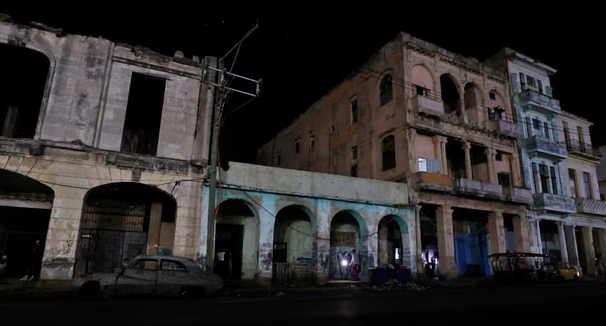
History follows no libretto; I suggest that greatness is not always a function of wealth or easy living. Sometimes it is a measure of impact, endurance, and cultural force. By these standards, Cuba stands apart.
Cuba is the largest island in the Caribbean, but its influence has long exceeded its geography. From the Spanish empire to the Cold War, from sugar and slavery to revolution and resistance, Cuba has repeatedly found itself at the center of world events. Few islands have shaped international politics so profoundly, or been shaped so relentlessly by them.
Culture may be Cuba’s strongest claim. Cuban music, son, rumba, mambo, salsa, Afro-Cuban jazz, did not merely evolve locally; it reorganized a global sound. Habana helped give birth to modern Latin music, influenced American jazz, and left fingerprints on pop culture across Africa, Europe, and the Americas. Cubano writers, filmmakers, and artists have likewise projected a distinct voice that blends African, Spanish, and Caribbean traditions into something unmistakable.
History has tested Cuba harshly. Colonial exploitation, slavery, U.S. intervention, dictatorship, revolution, and a six-decade embargo have imposed constraints few societies have endured continuously. And yet Cubans persist, maintaining a strong national identity and social cohesion that folks note immediately. Survival itself has become part of the Cubano’s character.
That resilience shows in unexpected places. Cuba’s literacy rate rivals that of wealthy nations. Its doctors and nurses have served abroad in disaster zones and underserved regions, earning international recognition. These achievements coexist with shortages, political repression, and limited personal freedoms, realities that complicate a romantic portrait of the island.
Nature adds another layer. Cuba’s coral reefs, mangroves, forests, and limestone valleys remain comparatively intact, preserved in part by economic isolation. In an era of overdevelopment, restraint, intentional or not, has become a Cuban asset.
None of this erases Cuba’s failures. Many exiles have left in search of opportunity. Dissent is constrained. The economy struggles. Greatness does not require perfection, but it does require freedom and honesty.
So is Cuba the greatest island on Earth? If the question is about power per capita, cultural reach, historical gravity, and human endurance, Cuba belongs in the conversation. Other populations may be richer, freer, or more technologically advanced. Few islands have mattered more to the world, or meant more to their people, over such a long and turbulent arc.
Greatness, like Cuba itself, resists simple definition. But it is hard to argue that any island has left a deeper mark on modern history while demanding so much from those who call it their birthplace.
🎶 Cultural power
-
Cuban music, son, salsa, mambo, rumba, jazz, #AfroCubana music shapes global soundscapes.
-
Literature, dance, visual art, and film from Cuba punch far above the island’s population.
-
Cuban culture blends African, Spanish, Indigenous, and Caribbean traditions with rare coherence and depth.
📜 History and resilience
-
Cuba’s history is colonization, slavery, independence struggles, revolution, embargo, and survival.
-
The island’s national identity and resilience are often cited as unique; few places have endured so long, sustained external constraint while maintaining sovereignty.
🧠 Education and science
-
Despite economic hardship, Cuba has achieved near-universal literacy, world-recognized medical training, and advances in public health and biotechnology.
-
Its international medical brigades have operated in dozens of countries.
🌿 Natural beauty
-
From Viñales’ limestone mogotes to coral reefs, mangroves, and hundreds of beaches, Cuba’s ecosystems are among the best preserved in the region.
-
Relative underdevelopment has limited some of the environmental damage seen elsewhere.
⚖️ The counterarguments
-
Political repression, limits on free expression, economic scarcity, and emigration complicate claims to “greatness.”
-
Other islands—Madagascar (biodiversity), Great Britain (global impact), Japan (technology and culture), and New Guinea (ecology)- are considered “greatest” in many other dimensions.
🧭 Cuba’s the greatest island?
Only if “greatest” means:
-
Cultural influence per square mile
-
Historical significance beyond its size
-
Human resilience and global identity
-
A place that refuses to be ignored
A battered Cuba braces for aftershocks as US seizures of oil tankers linked to Venezuela surge
Cuba's Diaz-Canel says there are no current talks with the US government
The Trump government issues a warning to Havana, which has lost a key ally in its struggle with blackouts and fuel shortages. ‘Naked imperialism’: how Trump's intervention in Venezuela is a return to form for the US.
https://www.theguardian.com/world/2026/jan/04/venezuela-us-capture-nicolas-maduro-anxiety-cuba
The Amazing Cuba Geography
https://youtu.be/GXLDrhnFndE?si=IBXp5SUvd6W5F46O
South Florida Cubans react to U.S. allowing Mexico's oil aid to Cuba amid crisis https://www.cbsnews.com/miami/news/south-florida-cubans-react-to-u-s-al…