GOP deficit spending must stop before america goes broke. Will USA become one of Trump’s former businesses?
The average taxpayer can't personally balance a $1.9 trillion federal deficit, but millions acting collectively can influence those who control the budget.
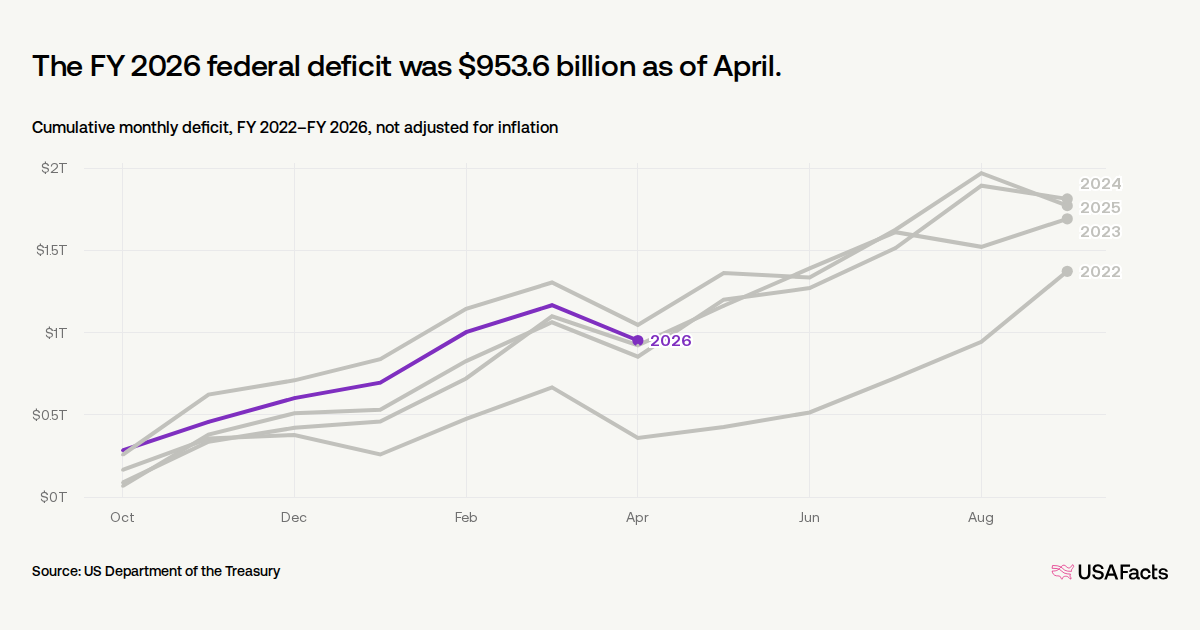
CBO projects a $1.9 trillion federal deficit in FY2026, with debt held by the public reaching 101% of GDP and rising to 120% by 2036 under current law.
What an ordinary taxpayer can actually do
- Make the deficit a voting issue.
Ask every congressional candidate a simple question:
“What specific spending cuts and revenue changes will you support to reduce the deficit—and what will you oppose?”
Don't accept “waste, fraud and abuse” as the entire answer. Demand numbers. -
Contact your senators and House member.
A short, specific message is more useful than an angry general complaint: “I am a taxpayer and voter. I want you to support a credible plan that reduces annual deficits and stabilizes the national debt. Please tell me specifically which spending programs and tax policies you support changing.” - Follow the money.
Look at the federal budget yourself rather than relying exclusively on partisan talking points. The Congressional Budget Office provides public budget projections and tools showing how changes in taxes or spending affect deficits and debt. - Organize locally.
Ten voters contacting a representative is one thing. Ten thousand constituents signing a deficit-reduction pledge and showing up at a town hall is another. - Support candidates who accept arithmetic.
There is no painless solution. The government can reduce deficits through some combination of spending restraint, economic growth and additional revenue. Pretending that eliminating a handful of wasteful programs will solve a trillion-dollar deficit isn't serious budgeting. - Don't let either party off the hook.
This is especially important. The debt problem is bigger than one president or one party. If you're serious about fiscal responsibility, apply the same standard to Republicans and Democrats. - Use your own household as a model.
You can't control Washington's budget, but you can avoid unnecessary personal debt, build emergency savings and invest for the future. A financially resilient citizen is less vulnerable when government finances deteriorate.
The average taxpayer's most powerful weapon isn't refusing to pay taxes, it's democratic accountability.
The federal government cannot simply stop paying its bills because citizens are angry. And tax evasion is not legitimate deficit reduction.
But voters can fire politicians. CBO estimates that interest payments alone will exceed $1 trillion in 2026 and rise to about $2.1 trillion by 2036. That's the part of the debt story that should concern ordinary Americans: money going to service yesterday's borrowing is money unavailable for tomorrow's priorities.
So the taxpayer's message should be simple: Show me the numbers. Show me what you're cutting. Show me how you're paying for what you're keeping. And don't send me the bill without telling me who's going to pay it.
That could make a very strong “Taxpayer's Bill of Rights Against Deficit Spending” manifesto.
Because America cannot keep borrowing and spending as if the bill will never come due.
The national debt has now blown past $40 trillion, while the federal government is running a deficit approaching $2 trillion this fiscal year.
Republicans who once preached fiscal responsibility are now presiding over a borrowing binge that threatens America's economic future. Tax cuts without corresponding spending discipline, soaring military expenditures and rapidly rising interest costs are pushing the government deeper into debt.
The irony is hard to miss: Donald Trump built a fake political brand around being a businessman who knows how to manage money. Yet many of his former businesses ended in bankruptcy or financial distress. America cannot afford to become another balance sheet casualty.
The United States isn't a corporation, and the federal government cannot literally go bankrupt in the same way a private company does. But America can reach a point where debt service consumes an ever-larger share of national resources, borrowing costs rise and investors lose confidence.
That warning light is already flashing. Interest costs are surging, Treasury yields have climbed and the fiscal deficit remains enormous.
Deficit spending isn't free. Somebody eventually pays the bill, taxpayers, consumers, workers, businesses and future generations.
It's time for Republicans and Democrats to come together and stop the fiscal recklessness embraced by conservatives.
American taxpayers need to adopt a budget that works before the debt becomes our master.
https://www.factcheck.org/2008/02/the-budget-and-deficit-under-clinton/