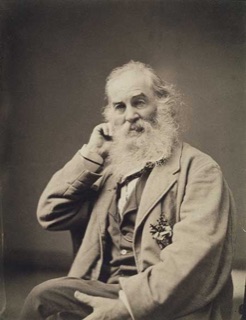
Walter Whitman Jr. was a poet, journalist, essayist, and novelist who is considered a seminal figure in American and world literature.
Whitman was called the "father of free verse" for his incorporation of realism and transcendentalism into his writing. Whitman is best known for Leaves of Grass, a self-published collection of poetry inspired by his travels across the American frontier and his admiration for Ralph Waldo Emerson.
"When Lilacs Last in the Dooryard Bloom'd" is a long poem written by American poet Walt Whitman (1819–1892) as an elegy to President Abraham Lincoln. It was written in the summer of 1865 during a period of profound national mourning in the aftermath of the president's assassination on 14 April of that year.
The poem, written in free verse in 206 lines, uses many of the literary techniques associated with the pastoral elegy. Despite being an expression to the fallen president, Whitman neither mentions Lincoln by name nor discusses the circumstances of his death in the poem. Instead, he uses a series of rural and natural imagery including the symbols of the lilacs, a drooping star in the western sky (Venus), and the hermit thrush, and he employs the traditional progression of the pastoral elegy in moving from grief toward an acceptance and knowledge of death. The poem also addresses the pity of war through imagery vaguely referencing the American Civil War (1861–1865), which effectively ended only days before the assassination.