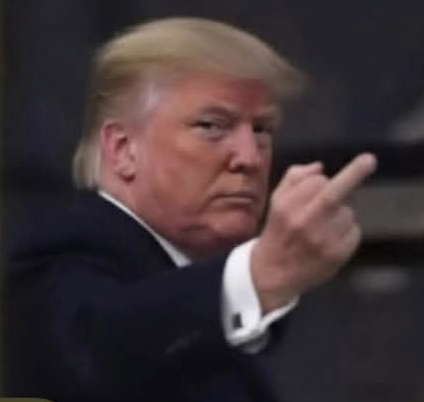
In a coincidence noticed by absolutely everyone, POTUS has spent 2025 building an entire policy architecture around one element on the periodic table: gold. Atomic number 79. Now 80, but still his number one.
He signed an executive order exempting gold bullion, along with tungsten, uranium and graphite, presumably gold's less charismatic entourage, from his sweeping reciprocal tariffs. The move reversed a summer scare in which U.S. Customs briefly suggested Swiss gold bars might get taxed, sending bullion prices sprinting and forcing the White House to clarify, within 72 hours, that no, actually, gold is fine. Gold is always fine and gets a kissing pass.
Separately, the administration has been selling a fast-track immigration product that it markets with a subtlety normally reserved for Vegas casino signage as his namesake "Gold Card." For $1 million plus a $15,000 processing fee, or $2 million for the corporate version, with a $5 million "Platinum" tier reportedly still in the oven, wealthy foreigners can bypass the standard visa line entirely. His Commerce Secretary has defended the program as a way to "bring in the top of the top," while critics, including a lawsuit from the American Association of University Professors, argue it turns immigration into a loyalty program.
Court filings this year put actual uptake at a few hundred applicants, well short of the "millions of cards" Trump once mused about selling from the back of Air Force One. Even billionaires, it turns out, like to think it over.
Late-night hosts and political cartoonists have leaned into an old comparison: Ian Fleming's 1964 Bond villain Auric Goldfinger, a wealthy businessman with an all-consuming gold fixation, memorably rendered on screen the following year. The resemblance, commentators note, is aesthetic and thematic rather than criminal, nobody is accusing anyone of gold-electroplating rivals, and Goldfinger's Fort Knox heist remains, as far as public record shows, fictional. The golf-cheating reputation, on the other hand, is a bipartisan punchline that predates the presidency entirely.
Meanwhile, the White House's proposed ballroom addition, defended by the administration as a matter of "military necessity", has drawn its own skeptics. MSNBC's Jen Psaki summed up the mood for a lot of observers: it is, she noted, a stretch to find the national-security rationale in a room reportedly slated for heavy gold trim.
Whether any of this adds up to the "cataclysmic scheme" some critics allege, or just a president with a very consistent color palette, is a matter voters will ultimately settle.
So, to wrap-up, can a powerful tycoon achieve a cataclysmic scheme to raid our US treasury and obliterate the world economy, or will American citizens stop the plan by voting?
Who exempted gold bullion from his reciprocal tariffs, and named his special visa program for wealthy foreigners the Trump Gold?
Has any other man in western cultural legend who matches gold addicted characteristics? Yes there is. In a 1965 James Bond spy movie “Goldfinger,” in which the evil enemy is Goldfinger, a rich businessman whose novelist Ian Fleming’s super villain looked in the film version remarkably like Donald J. Trump.
Goldfinger killed his jilted female sex partners by painting them gold, Trump paints his own face gold and everything that surrounds him. And, just like Trump, Goldfinger cheats at golf.
POTUS is trying to get around restrictions on the construction of his White House ballroom by arguing that the facility is a military necessity.
But as MS Nowi points out, it's hard to argue the national security purpose of covering everything in gold.