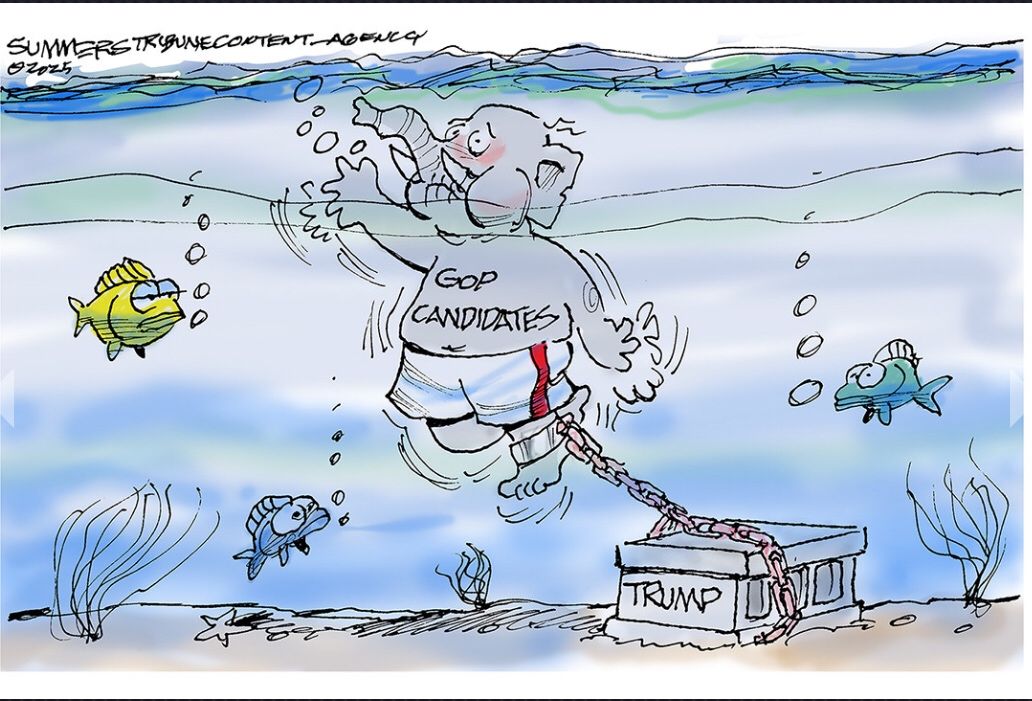
Worried about the midterm elections, the Republicans attempt to mobilize rural and city-dwellers to register and vote.
Trump has increasingly reshaped the Republican Party, with many GOP lawmakers aligning closely with his leadership and messaging. Following the 2024 election, Trump amplified that influence, erroneously describing his victory as a landslide that delivered an unprecedented and powerful mandate.
Election results, however, offered a more nuanced picture. Still, many Republicans embraced Trump’s characterization. Some members of Congress went further, suggesting the party should fully adopt Trump’s agenda without reservation.
That level of alignment may carry risks heading into the 2026 midterm elections, particularly for Republicans in increasingly competitive districts.
Foreign policy may prove a key test. Trump’s decision to initiate a war with Iran came without a sustained effort to build a clear, consistent case to the public. Administration messaging around the conflict has continually shifted, while critics pointed to instances where Trump appeared unfamiliar with key details.
Such inconsistencies can complicate efforts by Republican lawmakers to defend the policy, especially if public support weakens. Historically, the president’s party faces headwinds in midterm elections, and close identification with a controversial agenda can heighten political vulnerability.
For the GOP, the immediate challenge will be dealing with the elephant in the house and attempting to balance party unity with the flexibility to respond to shifting political conditions.
Republican candidates have tethered themselves as extensions of Trump rather than independent actors, their electoral fortunes hinge heavily on:
- Trump’s approval ratings,
- the perceived success or failure of major policies like an unpopular war.
- Additionally, local district dynamics.
POTUS approval ratings are underwater as they continue to sink to the bottom of the ocean floor. And so it goes.
