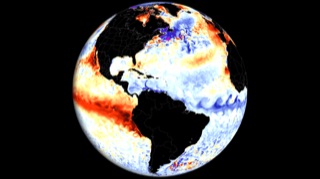
Ladies and gentlemen welcome to the greatest thriller on earth. El Niño fights against global warming and the winner is…
The oceans are sending two unusual signals at the same time. A rare Atlantic Niña has emerged in the tropical Atlantic while a Super El Niño continues to build across the equatorial Pacific, two opposite ocean patterns separated by thousands of miles, according to Severe Weather Europe.
El Niño and La Niña are opposite phases of the same climate pattern, known as the El Niño–Southern Oscillation(ENSO):
El Niño: The central and eastern tropical Pacific Ocean becomes warmer than average, altering global weather patterns.
La Niña: The same region becomes cooler than average, often producing broadly opposite weather effects.
The Pacific doesn't typically have both conditions at the same time. Instead, ENSO shifts between:
El Niño - Neutral conditions - La Niña
Sometimes, one phase ends and the other begins over several months. During this transition, weather patterns can be less predictable, but it's not because the two are "meeting"—it's because the ocean and atmosphere are changing from one state to the other.
If they could somehow occur simultaneously in the same region (which current climate science doesn't support), their opposing effects would largely interfere with each other. In reality, the climate system settles into one phase or the other, or remains neutral.
