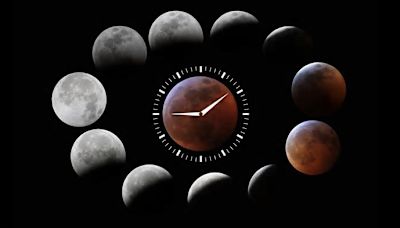
Here’s a visibility map for the total lunar eclipse, Blood Moon, areas where the eclipse is fully or partially visible across the globe.
https://www.pbs.org/newshour/science/watch-live-septembers-blood-moon-t…
When does the "Blood Moon" eclipse occur?
Universal Times (UTC):
- Penumbral eclipse begins: ~15:28 UTC
- Partial eclipse begins: ~16:26–16:27 UTC
- Totality begins: ~17:30 UTC
- Maximum eclipse: ~18:11 UTC
- Totality ends: ~18:52 UTC
- Partial eclipse ends: ~19:56 UTC
- Penumbral eclipse ends: ~20:55 UTC
- Totality duration: ~82 minutes, WikipediaSpaceTime and Date
Local Times for Key Cities
City / Region
Totality Begins
Totality Ends
London (BST)
18:30 BST
19:52 BST Space+1Time and Date
Berlin/Vienna/etc. (CEST)
19:30 CEST
20:52 CEST Space+1
Cairo/Istanbul (EEST)
20:30 EEST
21:52 EEST Space+1
Cape Town (SAST)
19:30 SAST
20:52 SAST Space+1
Mumbai (IST)
23:00 IST (Sept 7)
00:22 IST (Sept 8) SpaceTime and Date
Tehran (IRST)
21:00 IRST
22:22 IRST SpaceSkyline News
Bangkok (ICT)
00:30 ICT (Sept 8)
01:52 ICT SpaceSkyline News
Beijing/Hong Kong (CST/HKT)
01:30
02:52 SpaceSkyline News
Perth (AWST)
01:30 AWST
02:52 AWST SpaceSkyline News
Tokyo (JST)
02:30 JST
03:52 JST SpaceSkyline News
Sydney (AEST)
03:30 AEST
04:52 AEST SpaceSkyline News
What You'll See by Region
- Asia & Australia: Most of these regions will see the entire eclipse, with the totality happening during the night or early morning hours. SpaceTime and DateThe Times of IndiaLive Science
- Europe & Africa: In many areas, the Moon will already be fully eclipsed as it rises, offering a dramatic blood‑red appearance low on the horizon. Space+1Time and Date
- Americas: The eclipse will occur during daylight hours, so not be visible, though some regions may offer livestreams. Live ScienceSpace+1
Summary
- Peak totality everywhere: ~17:30 to ~18:52 UTC
- Europe: The Best chance is catching the rising red Moon just after totality begins.
- Asia/Australia: Full view from beginning to end.
- Americas: Not visible—opt for a livestream instead.