
When I was a child, I looked forward to celebrating the Epiphany as the day the 3 Magi arrived offering Jesus gifts. They were bringing Jesus the gifts of gold, frankincense, and myrrh that held symbolic meaning, honoring the newborn baby as king.
Then along came Don, who managed to change a beautiful religious holiday into a shameful day in America.
History is unlikely to remember the legal nuances of Trump v. United States. It will remember the result: a president accused of trying to overturn an election was returned to power and shielded from prosecution by a Court reshaped in his image. That is not how republics endure. It is how they warn the future.
January 6 was not just a test of democracy; it was a test of accountability. The MAGA mob failed. The courts did not. By placing the presidency beyond the reach of criminal law, the Supreme Court ensured that power, rather than principle, would have a final say. That is not constitutional balance. It is sanctioned impunity.
This date in historical precedent illustrates the fragility of democracy. Trump v. United States showed who would be allowed to break it without consequence. Six justices did not excuse the attack on the Capitol—but they made sure its alleged architect would never answer for it in a court of law. That decision will outlive this presidency. And it will define this Court.
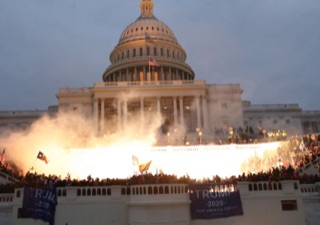
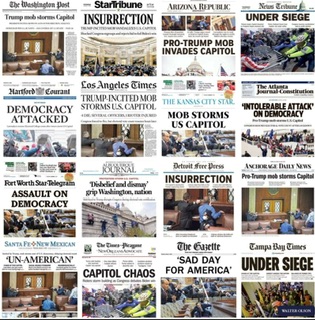
Five years after a violent mob stormed the U.S. Capitol to stop the peaceful transfer of power, Donald Trump is not standing trial. He is president again.
That outcome was not determined by a jury or by a failure of evidence. It was decided by the Supreme Court.
After Trump’s reelection, Special Counsel Jack Smith dropped the federal prosecution, citing the Court’s ruling in Trump v. United States. In that decision, Chief Justice John Roberts and five other justices dramatically narrowed the circumstances under which a sitting president can be criminally prosecuted for conduct connected to official acts. Three of those justices were appointed by Trump himself.
The ruling did not declare Trump innocent. It did not exonerate the events of Jan. 6, 2021. Instead, it created a constitutional shield around the presidency—one that made continuing the case legally untenable once Trump returned to office.
For generations, Americans have operated under a basic assumption: no one is above the law. The Court did not explicitly reject that principle, but it redefined it in a way that places the president in a category apart, at least while in power. The practical effect is unavoidable. A case alleging an unprecedented assault on democratic institutions was halted not by voters weighing evidence, but by justices redefining the limits of accountability.
History will debate the Court’s intentions—whether the justices were acting to protect the office or to avoid destabilizing the system. But consequences matter more than motives. The consequence here is that a president accused of trying to overturn an election will never face a jury while holding office.
That leaves an uncomfortable question for the country: Was January 6 the moment American democracy bent—or the moment the Supreme Court ensured it would not snap back?
