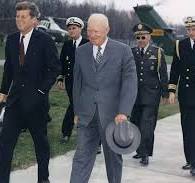
On April 22, 1961, in the immediate aftermath of the disastrous Bay of Pigs invasion, POTUS John F. Kennedy, a Democrat, was humiliated, shaken, and privately questioning his judgment. Just ninety days into his presidency, he felt he had failed the nation.
Then, Republican President Dwight D. Eisenhower did something that revealed the true measure of his character.
The former president drove himself from Gettysburg to Camp David to see the devastated young leader who had succeeded him. When Eisenhower arrived, Kennedy braced for a lecture, or worse, an I told you so. Eisenhower had warned him about the CIA’s overly optimistic assessments. He had every right to be stern.
Instead, Eisenhower embraced him. Then he said something Kennedy would repeat for the rest of his life:
“Mr. President, I failed in my first major military operation, too. It’s what you do next that defines you.”
Eisenhower went on to share a story he rarely told, about a disastrous raid he had ordered in North Africa in 1942, an operation that cost dozens of men their lives and nearly ended his career long before D-Day. Failure, he told Kennedy, is not the opposite of leadership. It is part of it. The greatest commanders are not those who avoid mistakes, but those who learn to carry them without being crushed.
They talked for hours, walking the grounds of Camp David. Witnesses later said they could see Kennedy physically change, his shoulders straightening, his voice regaining strength.
When they parted, Eisenhower gave Kennedy something deeply personal: his own copy of Ulysses S. Grant’s memoirs, with a passage marked describing how Grant endured devastating defeats before ultimately winning the Civil War. Kennedy kept the book on his desk for the remainder of his presidency.
Eighteen months later, after the successful resolution of the Cuban Missile Crisis, Kennedy wrote Eisenhower a brief note:
“I read Grant. I remembered your words. Thank you for not giving up on me.”
This is mentorship at its finest, not offering answers in someone’s darkest moment, but giving them courage.
Eisenhower didn’t rescue Kennedy from failure. He rescued him from being alone in it.
Mentors do three heroic things:
-
They normalize failure without minimizing responsibility.
Eisenhower didn’t excuse Bay of Pigs. He reframed it. He told Kennedy: You are not uniquely broken. You are now initiated. -
They lend their earned confidence when yours is gone.
In moments of crisis, mentors temporarily hold belief for you. They say, I’ve been here. You can survive this. -
They pass down memory, not instruction.
Not advice. Not doctrine. Story. Grant. North Africa. Scars. Mentorship is the transfer of lived truth.
Villains hoard power and control.
Mentors offer resilience… And so it goes.