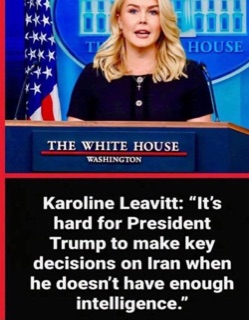
A fact-check from April 2026 confirmed it: the claim that Karoline Leavitt said Trump lacks enough intelligence to make decisions about Iran is false. The quote circulated widely on social media as a satirical dig at Trump, but it wasn't something Leavitt actually said in a briefing, its a fabricated line that gained traction around the time Trump was making disputed claims about the Iran war and his foreign policy record.
What Leavitt has actually said on the record about Iran runs the opposite direction — defending, not undercutting, the administration's intelligence basis. In one March briefing, she pushed back on a CBS correspondent questioning Trump's rationale for military action, insisting his decision was based on intelligence and a year of negotiations with Iran, and stated flatly that the president "is not making this up." So to clear up, the line makes for a good punchline, but it's not a real quote.
News by definition is the exception when something occurs which is the exception, like a plane crash to others landing safely.
In journalism, news is the timely, factual reporting of current events and information that affects the public. Journalists determine what becomes news by evaluating specific "news values," such as timeliness, proximity, consequence, prominence, human interest, and oddity.
According to the American Press Institute https://americanpressinstitute.org/
- Timeliness: The event must be happening now or be highly relevant to the immediate past or future.
- Impact/Consequence: Events that directly affect a large portion of the audience.
- Proximity: Events occurring close to the audience's geographic location or community.
- Prominence: Stories involving well-known figures, such as politicians or celebrities.
- Human Interest: Emotional or compelling narratives that evoke empathy or curiosity.
While news is the raw information about what happened, journalism is the professional process of verifying, contextualizing, and distributing that information.