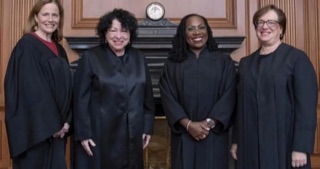
I have always told my students and colleagues that women are much smarter and tougher than men, and the SCOTUS ladies proved it.
This week, the women of the United States Supreme Court did something far too many men who are elected officials and represent male and female constituents have failed to do: they stood up for truth and justice and did so with clarity, courage, and constitutional conviction.
In oral arguments over whether a president can ignore established law and effectively erase birthright citizenship, Trump’s legal team floated a breathtaking argument: that the executive could sidestep judicial rulings he doesn’t like. The justices—especially the women on the bench, were having none of it.
Yes, even Amy Coney Barrett, Trump’s own handpicked nominee, cut through the noise. Staring down Trump’s lawyer, she asked the question at the heart of the case: Are you suggesting the president can ignore court rulings he disagrees with? Her tone wasn’t rhetorical. It was incredulous.
Because that’s exactly what this case boils down to: a wannabe king daring the courts to stop him.
Justice Ketanji Brown Jackson didn’t just challenge the logic, she torched it. She warned that Trump’s argument would turn the legal system into a “catch me if you can” game, where the government could violate people’s rights at will, forcing each person to sue for their freedom as the wreckage piles up. That’s not the law. That’s tyranny in slow motion.
Justice Elena Kagan drove it home with ice-cold precision: “Every court is ruling against you.” Translation? This isn’t a novel constitutional question. This is a last-ditch power grab dressed up in bad lawyering.
Then came Justice Sonia Sotomayor, wielding a hypothetical like a sledgehammer: What if a president decided to seize every American’s guns? Would courts have to sit on their hands while constitutional rights were trampled coast to coast?
Her point was clear: If the president can defy court orders at will, we don’t have checks and balances. We don’t even have a Constitution. We have a monarch.
This case wasn’t just about immigration. It was about whether a president can bulldoze the rule of law and dare the courts to stop him. It was about whether the judicial branch still has the power to stand in the way of authoritarian overreach.
And the fact that it was the women of the Court, liberal, conservative, and everything in between, who formed the loudest, clearest line of defense? That wasn’t poetic justice. It was historic.