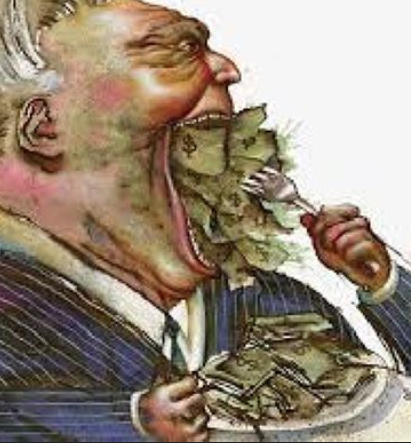
Humans differ from other animals in one very important respect, and that is that he has some desires which are, so to speak, infinite, which can never be fully gratified, and which would keep him restless even in Paradise. The boa constrictor, when he has had an adequate meal, goes to sleep, and does not wake until he needs another meal. Human beings, for the most part, are not like this.
Greed is often framed in modern economic discourse as a force that drives growth and innovation. In classical political thought, however, it was viewed with far greater caution. Plato described greed as “the greatest of all plagues,” warning that the unchecked pursuit of wealth could undermine the stability of society.
Power is insatiable. Nothing short of omnipotence could satisfy it completely. And as it is especially the vice of energetic men, the causal efficacy of love of power is out of all proportion to its frequency. It is, indeed, by far the strongest motive in the lives of important men.
Across centuries of political theory, a consistent concern emerges: concentrated wealth can distort political power, weaken institutions, and deepen social divisions. While contemporary economic systems often emphasize the benefits of self-interest and market incentives, earlier thinkers warned that unchecked accumulation carries significant risks.
The debate remains relevant as policymakers and economists confront widening inequality alongside continued economic growth. At its core is a fundamental question that has endured since antiquity: whether the pursuit of wealth strengthens societies, or ultimately puts them at risk.
Desire to possess as much as possible of goods, or the title to goods, is a motive which has its origin in a combination of fear with the desire for necessaries. I once befriended two little girls from Estonia, who had narrowly escaped death from starvation in a famine. They lived in my family, and of course had plenty to eat. But they spent all their leisure visiting neighbouring farms and stealing potatoes, which they hoarded. Rockefeller, who in his infancy had experienced great poverty, spent his adult life in a similar manner.
Do you remember the cult classic, Dr. Strangelove? https://mail.google.com/mail/u/8/#inbox/FMfcgzQgKvFkXfJpdhLqCJQlSLdzfRQ…