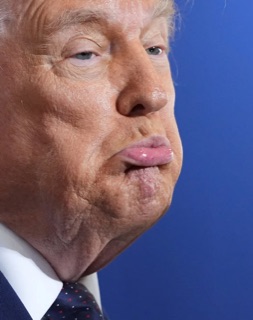
Thomas Friedman's framing of the signed Iran agreement is worth separating interpretation from what's in the text.
What's confirmed: The agreement ended military operations on all fronts and reopened the Strait of Hormuz, the waterway through which much of the world's oil, gas, and fertilizer must pass. It included a 60-day window for negotiating a final deal, with Iran promising "best efforts" toward safe passage of commercial vessels at no charge during that period. The U.S. also committed to working with regional partners on a reconstruction fund of up to $300 billion for Iran, and to lifting sanctions as part of a final deal, while Iran agreed to maintain the current status quo of its nuclear program rather than advancing it during the interim period. NPR + 3
Friedman's argument is essentially that the war's economic costs (gas and food prices) created a midterm-election problem for Trump, so he traded away leverage — and Israeli/Gulf state interests — to get a quick deal before November. That's a coherent political-economy argument, and there's real substance behind it: wartime oil-price spikes do hurt incumbents, and Trump's domestic legal exposure if Democrats retake Congress is a real factor people across the political spectrum have flagged.
The other side of it is also worth weighing:
- Ending a war that had reportedly killed thousands and devastated regional economies isn't inherently a "capitulation" — it can be read as the war achieving its stated aims (degrading Iran's nuclear capacity, reopening Hormuz) without indefinite U.S. military commitment.
- Iran's negotiator calling it a "failure for the U.S." is the kind of statement any negotiating party makes for domestic consumption — it's evidence of nothing on its own.
- A reconstruction fund and sanctions relief contingent on a final deal (not yet reached) is different from unconditional capitulation; the 60-day window is itself leverage, not just delay.
- Whether Israel and Gulf states were genuinely "sold out" versus consulted-but-disappointed is a matter of access to diplomatic detail that's still emerging — Trump did share a draft peace agreement with allies including Israel before finalizing it. Polymarket
So: is the eagle "crashing" or is one man cashing in? That's a judgment about whether ending the war now, on these terms, was strength or weakness, and reasonable people read the same facts differently depending on how much weight they put on (a) the war's human and economic toll versus (b) what could theoretically have been extracted with more time and pressure.
Friedman's read is one strong version of the skeptical case; the deal's defenders would frame it as ending a costly war through a negotiated framework rather than indefinite escalation.
Trump Put His Own Interests Above All in the Iran Deal
https://www.nytimes.com/2026/06/19/opinion/iran-israel-us-war-deal.html
Image: AP
