My wife and I spent the better part of a year trying to change her last name on her Social Security card and passport after we married.
Two federal agencies, both asking for slightly different paperwork, neither talking to the other. She's a citizen. It took months, certified copies, and more trips to more windows than I could count.
I think about that every time someone tells me proof-of-citizenship voting laws are a minor inconvenience.
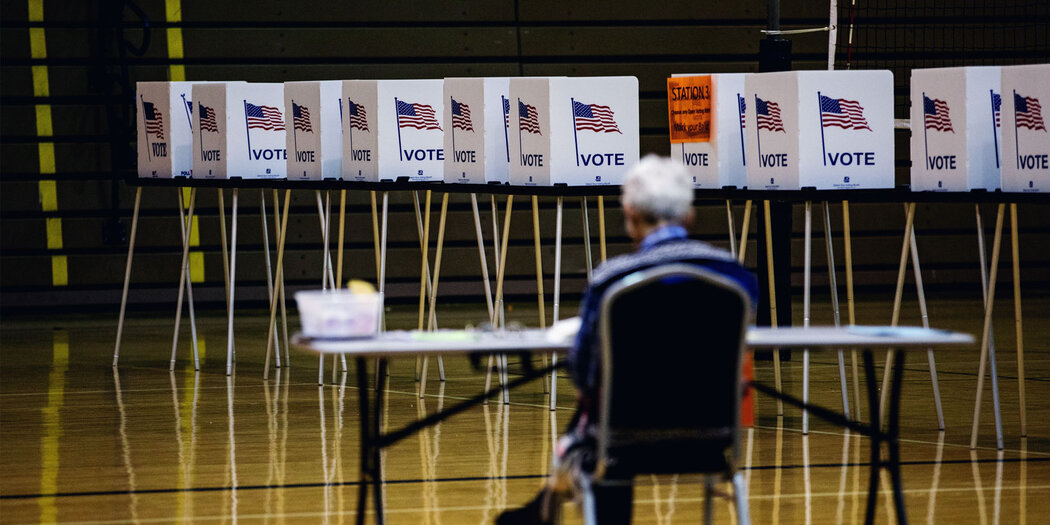
The SAVE Act reintroduced in the Senate this year as the SAVE America Act would require Americans to produce a passport or birth certificate to register to vote. Not once. Every time they register or re-register. Brennan Center research puts a number on what that means in practice: more than 21 million citizens don't have ready access to those documents. Roughly half of American adults don't hold a passport at all. And for millions of married women women exactly like my wife whose current legal name doesn't match the name on a decades-old birth certificate, the bill doesn't just ask for a document. It asks them to prove, all over again, that the person on that faded paper and the person standing at the counter are the same one.
Thomas Paine wrote that "a long habit of not thinking a thing wrong gives it a superficial appearance of being right." That's worth sitting with here. Requiring ID feels reasonable on its face most of us hand over a driver's license for things far less consequential than self-government. But the SAVE Act isn't asking for a driver's license. It's asking for the two hardest-to-replace documents in American life, on a timeline that doesn't bend for federal bureaucracy, marriage records, or the reality that not everyone's paperwork survived a house fire, a divorce, or a border crossing.
I crossed one of those borders myself, as a child, with my family, fleeing Cuba. I've spent a career since reporting on people trying to make their voice count in this country from Fort Chaffee in 1980 to newsrooms up and down the dial. My father used to tell me that how you play the game matters more than whether you win it. A government that quietly makes it difficult for its own citizens to vote isn't playing it straight, whatever the stated intention.
And the intentions being stated out loud aren't subtle. Elon Musk, backing the bill on X, wrote that it "must be done or democracy is dead." Whatever you make of that framing, it tells you plainly that this fight isn't about paperwork logistics it's about who gets to decide what democracy requires.
State-level reviews so far haven't found much to justify the urgency. Utah checked its rolls and found one noncitizen registered out of 1.8 million active voters who hadn't voted. Louisiana and Nevada turned up similarly little. Meanwhile, five states are already requiring these documents for the 2026 midterms, and election officials in some of them are warning about the cost and chaos of implementation, not the fraud it's meant to stop.
To be fair to the other side of this: supporters aren't wrong that voter rolls should be accurate, and that citizenship is a legitimate thing for a democracy to verify. Where the argument breaks down, in my view, is the gap between the stated problem — a form of fraud that keeps turning up vanishingly rare in every state that's actually gone looking for it and the size of the solution being proposed, which risks catching millions of legitimate citizens in the same net.
The SAVE Act won't die quietly. It rarely does, in one form or another. It's on all of us voters, clerks, reporters, husbands who watched their wives fight a bureaucracy for a piece of paper to keep asking whether the fix fits the problem it claims to solve.