As 2026 begins, many Americans are approaching the new year with tempered expectations and a renewed focus on intention. After years marked by political volatility, economic pressure, and social strain, the prevailing mood is one of steady progress rather than sweeping reinvention.
Across social media, community forums, and civic campaigns, messages emphasizing growth, self-acceptance, and resilience are gaining traction. Popular refrains emphasize embracing progress over perfection and acknowledging that personal development often unfolds unevenly. Mental health advocates say the shift reflects a broader cultural recalibration. “People are learning to value sustainability over intensity,” said a licensed therapist based in Chicago. “There’s a growing understanding that growth doesn’t have to be dramatic to be meaningful.” That perspective has also influenced how Americans think about self-care. Rather than framing self-love as indulgent or aspirational, many now describe it as practical, a form of maintenance needed to navigate prolonged uncertainty. The emphasis is on compassion for one’s present self, even when goals remain unfinished.
Fresh starts, traditionally associated with January resolutions, are also being redefined. Instead of rigid commitments, individuals are focusing on direction and consistency. Behavioral researchers note that small, repeatable actions are more likely to endure than ambitious but unsustainable plans. Hope remains a central, if cautious, theme. While optimism once implied confidence in rapid improvement, today it is more closely tied to perseverance. Continuing forward without clear outcomes is increasingly viewed as an act of resilience rather than resignation. That mindset extends beyond personal growth into civic life.
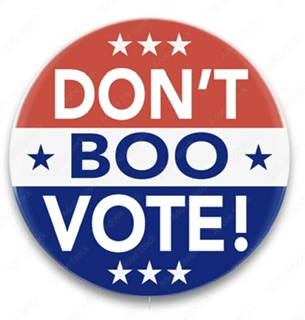
With local, state, and national elections shaping the year ahead, voter participation and community engagement are emerging as focal points for advocacy groups. Messaging around democracy stresses involvement over ideology, urging citizens to see participation as a responsibility rather than a reaction. “Democracy doesn’t function on autopilot,” said a nonprofit organizer involved in voter outreach efforts. “It depends on people showing up, even when they’re frustrated or fatigued.” Younger voters, in particular, are being encouraged to view civic engagement as cumulative. Casting a ballot, attending a meeting, or volunteering locally may feel modest in isolation, but together they form the infrastructure of democratic life.
As 2026 unfolds, the dominant narrative is neither escapism nor alarm. Instead, it is grounded in realism: acknowledging difficulty while choosing to move forward deliberately. Growth, in this framing, is not measured by transformation but by continuity — the willingness to take the next step, however small. In a year shaped by transition, Americans appear less focused on becoming someone new and more committed to sustaining what matters.