Our World Is Drowning and Someone Has to Take Responsibility Clean It Up.
WASTE WASHERS — A GLOBAL MANIFESTO
A new movement is demanding that the world stop looking away from the waste it creates — one discarded phone, one rotting ton of food, one corrupt budget line at a time.
BY WASTE WASHERS · 2026
On a Tuesday morning in a warehouse outside Rotterdam, workers are shredding brand-new clothing — coats, dresses, shoes still in their boxes — that a fast-fashion retailer deemed unsellable. Across the Atlantic, a data center the size of four city blocks hums through the night, consuming enough electricity to power a small nation, processing data that will never be read. And somewhere in a suburb of Atlanta, a well-meaning family drags three bags of broken appliances, stained mattresses, and outdated electronics to the curb of their local thrift store, convinced they are doing good.
They are not alone. And none of them think they are part of the problem.
That is precisely the problem.
“Waste is not inevitable. Waste is a choice. And every choice can be changed.”
A global movement is taking shape — one that refuses to accept waste as a side effect of modern civilization. Its name is Waste Washers, and its argument is simple: we have built a world that discards faster than it creates, and no single government, corporation, or charity is going to fix it without the public demanding that it stop.
The movement positions itself not as a recycling campaign or a charity drive, but as a watchdog — a tech-enabled force of citizens, journalists, data scientists, and everyday people who are done with the silence around the true cost of the world’s waste.
THE SCALE OF IT
Our Planet is Burying Itself
The numbers are not abstractions. Roughly one-third of all food produced globally — 1.3 billion tonnes per year — is lost or wasted, according to the United Nations Food and Agriculture Organization. At the same time, more than 700 million people go to bed hungry. The food exists. The need exists. What fails, every single day, is the system between them.
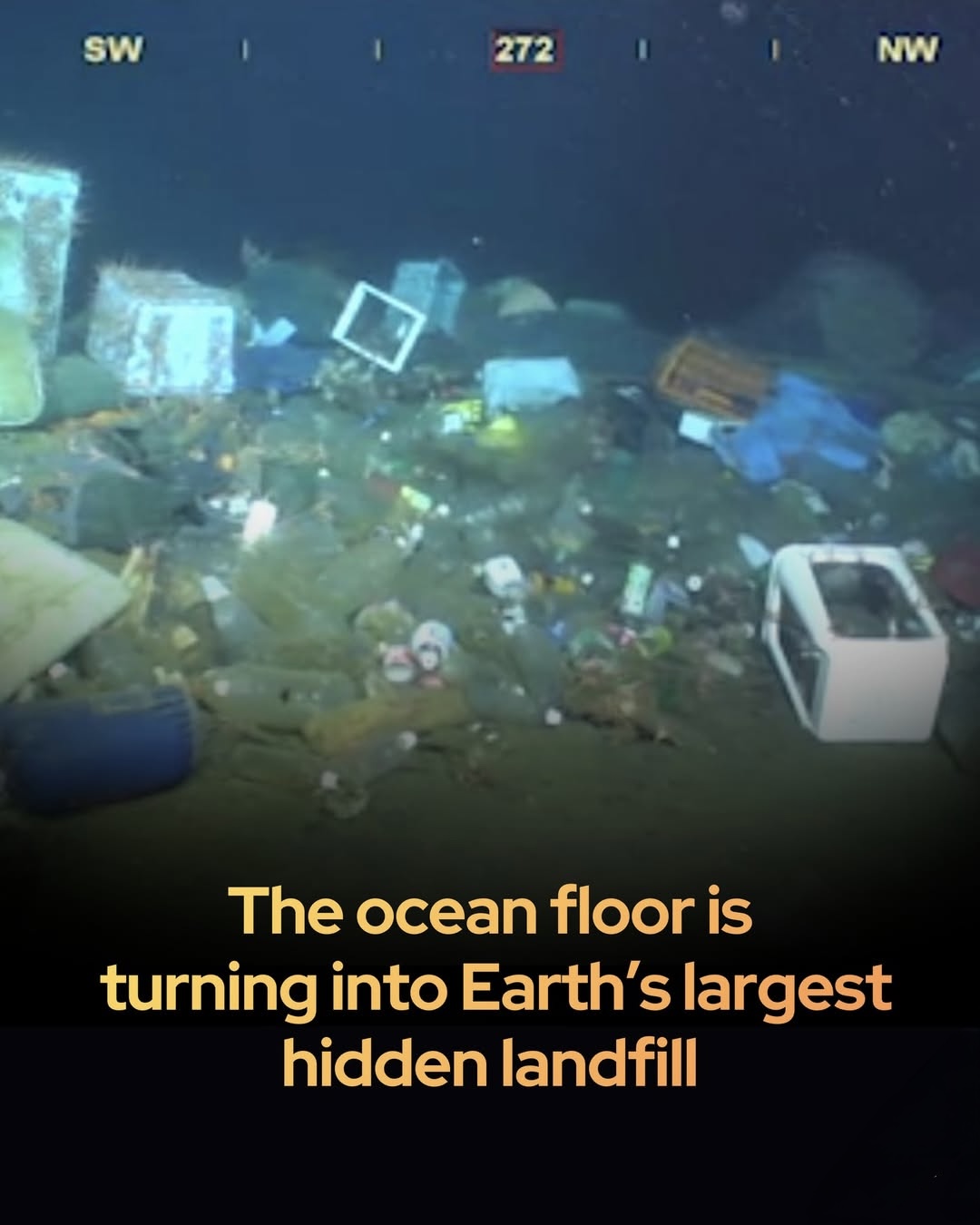
Oceans absorb over 8 million metric tons of plastic annually. Electronic waste — the phones, laptops, and appliances the world replaces on two-year cycles — is now the planet’s fastest-growing waste stream. The fast fashion industry generates 92 million tons of textile waste per year. Data centers, quietly powering the digital economy, account for as much as 2 percent of global electricity consumption — a figure that rises every year as the appetite for streaming, cloud storage, and artificial intelligence grows unchecked.
BY THE NUMBERS
1.3 billion tonnes of food is wasted each year globally — enough to feed every hungry person on earth twice over.
53.6 million metric tonnes of e-waste were generated in 2019 alone, with less than 20 percent formally recycled.
92 million tonnes of textile waste are produced annually by the fashion industry.
40% — the share by which energy efficiency improvements could cut global CO² emissions, per the International Energy Agency.
And then there is the waste that never makes headlines: the government contracts that balloon past budget with no accountability, the foreign aid that disappears into bureaucratic inefficiency, the corporate inventory quietly incinerated rather than donated because it is cheaper to destroy than to distribute.
“We have normalized waste at every level,” said one Waste Washers organizer. “We treat it as a technical problem, a logistics problem, someone else’s problem. It is none of those things. It is a moral failure, and it is ours.”
THE MOVEMENT
Watchdogs With Open Eyes
Waste Washers does not operate like a traditional nonprofit. There are no gala dinners, no celebrity spokespeople, no annual reports padded with stock photography of clean beaches. The model is closer to investigative journalism crossed with open-source activism: find the waste, name it publicly, and refuse to let it disappear.
Using satellite imaging, artificial intelligence, and open government data, the movement tracks illegal dumping sites, monitors deforestation linked to corporate supply chains, and publishes real-time dashboards rating companies and governments on waste transparency. The tools are sophisticated. The message is not complicated.
Hold them accountable. Then hold yourself accountable.
That second part is where the movement gets personal — and where many people find it uncomfortable.
“The thrift store is not a guilt-free disposal service. When you donate something broken, you are not being generous. You are outsourcing your trash.”
START AT HOME
The Good Intentions Problem
Consider the thrift store. It has become, for many Americans, the conscience-clearing final act of a closet cleanout: bag it, drop it, feel good. But thrift stores across the country report that as much as 25 percent of donated goods cannot be sold — and must be sent to landfill at the store’s expense. Mattresses. Car seats with expired safety ratings. Clothing too damaged to be worn. Electronics that haven’t worked in years.
The act of donation becomes, in those cases, an act of transfer. The donor’s problem becomes the charity’s problem becomes the landfill’s problem. The guilt dissolves. The waste does not.
Waste Washers argues this is not a minor issue of etiquette. It is a microcosm of the larger failure: the belief that good intentions are enough, that the feeling of doing something is equivalent to actually doing something.
Broken electronics belong at certified e-waste recycling programs, not on thrift store shelves. Mattresses belong at specialized recycling centers. Unusable clothing belongs in textile recycling bins. Hazardous materials belong at local collection events, not in curbside bags. The infrastructure exists. Using it is a choice.
THE DEMAND
Accountability Is Not Optional
The harder targets, of course, are not the well-meaning families. They are the corporations that have built planned obsolescence into their business models, manufacturing devices designed to fail so that replacements can be sold. They are the governments that permit landfill expansion instead of investing in circular economy infrastructure. They are the financial systems that allow billions in aid to vanish through inefficiency and corruption, while t,he communities that aid was meant to serve remain underserved.
Waste Washers demands transparency from all of them. Not as a negotiating position. As a baseline requirement for operating in a world that can no longer afford the alternative.
The International Energy Agency has said that energy efficiency improvements alone — without new technology, without dramatic lifestyle changes — could cut global carbon dioxide emissions by more than 40 percent. The solutions, in many cases, already exist. What is missing is the political and corporate will to implement them, and the public pressure to demand it.
“The world doesn’t need more waste managers. It needs people who refuse to accept waste as the price of progress.”
REDUCE · EXPOSE · REVOLUTIONIZE
This is not, Waste Washers insists, a counsel of despair. The movement’s name is deliberate: washers, not mourners. The work is not to document collapse but to clean up the mess — and to make clear, in the plainest possible terms, who made it and who is being asked to keep paying for it.
The world is drowning in what it throws away. Someone has to call it out.
That someone, the movement argues, is all of us.