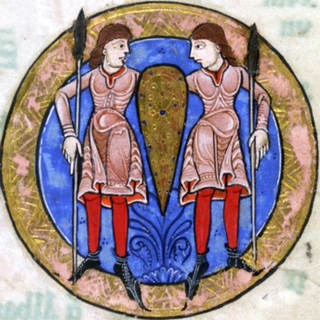
Wit, unker, git: Therese are the lost medieval pronouns of English intimacy.according to the BBC.
Tales of love and adventure from 1,000 years ago reveal a dazzling range of now-extinct English pronouns. They capture something unique about how people once thought about "two-ness". But why did they die out in the first place?
Which word would you use to refer to yourself? "I", presumably, in the singular. And how about you and a group of people? "We", of course, in the plural.
But how about you and one other person?
In modern English, there is no word for that. You would probably just use "we" or "the two of us".
But more than 1,000 years ago, you would have said: "wit".@ This term, once also used affectionately to describe the closeness between two people, is one of many personal pronouns that have been lost or transformed amid huge social and political change over the centuries. The English language has become simplified – but at times this has left gaps, creating confusion.
"Wit" means "we two" in Old English, a Germanic language spoken in England until about the 12th Century, which evolved into the English we speak today. Now completely lost, "wit" was part of an extinct group of pronouns used for exactly two people: the dual form, which also includes "uncer" or "unker" ("our" for two people) and "git" ("you two"). That dual form vanished from the English language around the 13th Century. (You can hear how some of these were pronounced in the short clips later in this article.)
https://www.bbc.com/future/article/20260408-the-extinct-english-words-f…