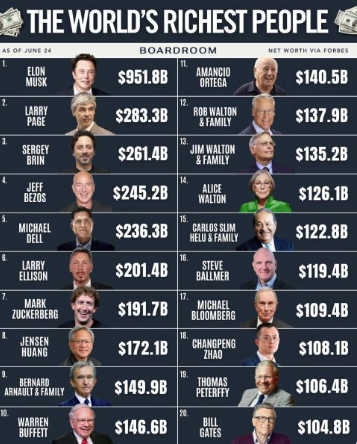
Successful is a position relative to others, status, wealth, titles, recognition. Valuable is what one contributes, the difference made in people's lives.
- Success is comparative; value is additive. Success asks "how do I rank?" Value asks "what did I build, fix, teach, or give?" You can be hugely successful and have added very little real value — and you can be enormously valuable while never showing up on anyone's list of "top" anything.
- Success can be inherited, timed, or lucky. Value has to be earned through contribution. Being in the right place, right family, right market cycle can make someone successful without them creating much of anything.
- Success is often visible and external (title, net worth, followers). Value is often invisible and internal — the mentor nobody publicly credits, the editor who saved a story before it aired, the engineer who quietly kept a system from failing.
- Success can end. Careers stall, empires crumble, elections are lost. Value, once created — a life changed, a body of work, a person taught — tends to persist even after the "successful" phase is over.
EG- Examples
- A anchor who becomes a household name (successful) versus the beat reporter who breaks the story that changes a policy and saves people money or lives, but whose name nobody remembers (valuable). You've probably worked with both types in newsrooms.
- A CEO who takes a company public and cashes out (successful) versus an engineer whose invention quietly underpins products for decades (valuable) — think of the person who designed a widely used protocol versus the founder who happened to IPO at the right moment.
- Your own field: plenty of broadcasters have had "successful" runs — ratings, awards, a recognizable face. Fewer have been genuinely valuable — moving policy, protecting a community's access to honest information, training the next generation of journalists who go on to do good work themselves. My own résumé (duPont, the Gatekeeper Award, decades building and mentoring bilingual journalists) actually reads as an attempt to hit both, which is rarer than it sounds.
The ideal, obviously, is when the two overlap. But when they diverge, value is the one that tends to hold up over time, because it's not dependent on an audience noticing.
People often labeled "successful" — high status, wealth, fame, or power, regardless of net contribution:
- Business tycoons who built massive personal fortunes and public profiles, but whose companies' broader impact is debated (extractive practices, monopolistic behavior, etc.)
- Political figures who won and held power at scale, independent of whether their policies helped or harmed the people they governed
- Celebrities and media personalities whose fame is enormous but whose actual body of work is thin
People often labeled "valuable" — measurable, lasting contribution to others, sometimes without matching fame or wealth:
- Norman Borlaug — agronomist whose wheat breeding work is credited with saving hundreds of millions of people from famine; most people have never heard his name
- Katalin Karikó — spent decades in relative obscurity on mRNA research before it became the backbone of COVID vaccines
- Local teachers, nurses, community organizers, translators, aid workers — the people whose names never make a masthead but whose daily work changes outcomes for the people around them
- In journalism specifically: the local reporters and stringers who break stories that force policy change or expose fraud, often at real personal risk, without ever becoming bylines anyone outside the industry recognizes
People who arguably hit both — success and value overlapping:
- Jonas Salk — developed the polio vaccine and became famous for it, but also refused to patent it, explicitly prioritizing distribution over personal wealth
- Fred Rogers — built a long, visible, successful media career that was also, by most accounts, genuinely good for the children who watched it
- Some scientists-turned-public-figures (Carl Sagan is a common example) — became famous while also demonstrably expanding public understanding
A pattern worth noting: the "valuable but not successful" list is much easier to fill with real, verifiable names than the "successful but not valuable" list — mostly because naming living people as not valuable gets into contested, subjective territory fast (someone's villain is someone else's hero, depending on politics or industry). So take the first category as illustrative of a type, not a verdict on specific people.