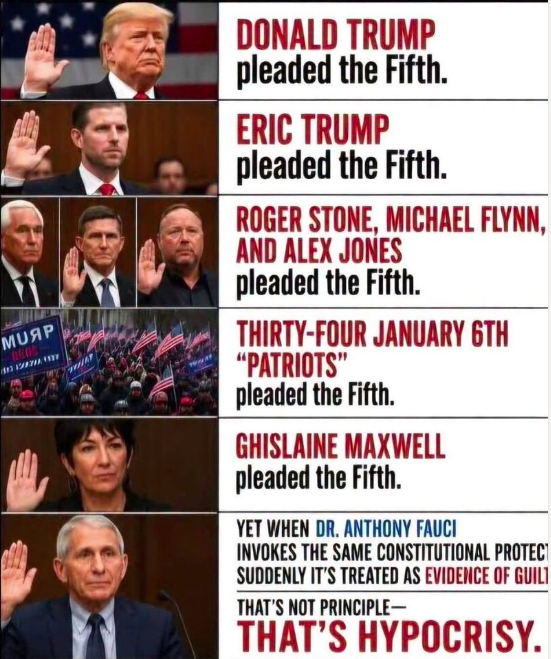
Republicans, from Trump-world figures to others in recent congressional and criminal proceedings, have pled the Fifth without facing this kind of contempt push from their own party.
Democrats made exactly that point at the hearing. Sen. Blumenthal called it "the culmination of a years-long crusade, which started more than six years ago when Dr. Fauci dared to contradict President Trump," and argued the whole episode is part of a broader campaign against Fauci personally rather than a neutral legal principle being applied consistently. CNN
So the honest picture is: Republicans have a stated legal rationale (the pardon argument), but it's disputed by legal scholars as untested, and critics see the intensity of the response as driven at least as much by years of political animus toward Fauci as by that legal theory.
Both things can be true at once: a genuinely novel legal question about preemptive pardons, and a selectively applied standard.
Legal experts pushed back on this framing. Georgetown law professor Abbe Smith said Republicans' claims about Fauci's inability to plead the Fifth did not seem correct, noting that "there would have to be some sort of legal understanding about the nature of the pardon and whether it is limitless," and that preemptive pardons are legally novel — "I'm not sure anybody knows how much protection they provide." Fauci's own team argued the pardon only covers pre-2025 conduct, so anything he said Wednesday could theoretically expose him to new perjury risk, which is a live self-incrimination concern regardless of the pardon. Fauci said he invoked the Fifth on his lawyers' advice because he believed his answers could expose him to new legal risks, arguing Paul was trying to build a criminal case against him rather than conduct oversight. NBC News