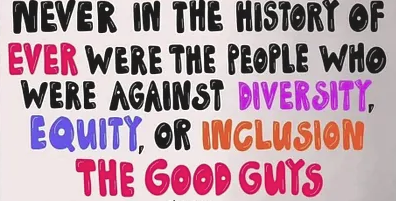
DEI is being reduced to a caricature: “DEI means taking a job away from a qualified white man and giving it to someone else.” That is a narrow-minded definition of what DEI actually encompasses. My experience also gives me a useful perspective: I am not arguing about DEI as an abstract political slogan. I'm describing what I’ve actually encountered in workplaces.
This is the real reason why I’m a DEI kind of guy and you should try it, you will like it. It’s a big, fat lie the way some conservatives and Republicans describe DEI.
We’re constantly told that Diversity, Equity and Inclusion is some kind of workplace boogeyman designed to hand jobs to women and minorities while pushing out men, particularly white men.
That has not been my experience. I’ve worked in corporate environments and have been exposed to DEI initiatives and discussions. Yes, DEI can involve measurable goals, such as increasing the representation of minorities in the workplace or increasing the number of women in leadership positions. But that does not mean white people, or white men, are automatically being fired, replaced or excluded from consideration.
It means an organization is trying to make its workforce more representative of the people it serves.
And DEI is about much more than race.
It can address gender, sexual orientation, religion, cultural background and disability, both physical and mental. It can include veterans and military families. It can address accessibility, workplace accommodations and the very real challenges people face when their circumstances make it harder to participate equally in the workplace.
And yes, all races can belong to many of those groups too. That's an important point that often gets lost in the political argument.
Take mental health. Men, including white men, can struggle with depression, anxiety, isolation, trauma and other mental-health challenges. A workplace that takes mental health seriously can help those employees just as it can help anyone else.
That isn't discrimination. That's inclusion. DEI doesn't have to mean lowering standards. It doesn't have to mean automatically choosing one person over another because of race or sex. At its best, it means looking at whether qualified people have genuinely equal opportunities to succeed and whether workplaces are unnecessarily excluding people because of characteristics that have nothing to do with their ability to do the job.
Could DEI programs be poorly designed or implemented? Absolutely. Anything created by human beings can be.
But that's an argument for doing DEI better, not for turning DEI into a political punching bag.
I’m a DEI kind of guy because I believe opportunity should be as open as possible to everyone.
Diversity doesn't mean replacing one group with another. Equity doesn't mean guaranteeing everyone the same outcome. Inclusion doesn't mean excluding anyone.
DEI can help all of us. And that's what I wish more people try it and see its for you and me.