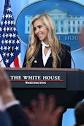
Katie Zacharia: fact-check, legal implications, and the two on-camera moments
The Washington Post, South China Morning Post,and journalist Judd Legum has raised questions about newly appointed White House press secretary Katie Zacharia’s claims about her legal credentials. Her first press briefing also produced a widely reported verbal slip in which she referred to Donald Trump as “my president” before correcting herself to “my husband.” These are two separate incidents, and the evidence behind them needs to be distinguished from online speculation.
Fact-check: Did Zacharia pass a bar exam?
- Zacharia graduated from Pepperdine University School of Law in 2011, according to The Washington Post.
- She has described herself as a lawyer and reportedly worked at Beijing-based Zhong Lun Law Firm from 2011 to 2013.
- When asked on October 13, 2026, where she passed the bar exam, she answered,“When I moved to China,” without identifying examination or jurisdiction.
- U.S. bar admission: Judd Legum reported finding no evidence that Zacharia had been admitted to practice in any U.S. state or Washington, D.C. The South ChinaMorning Post independently reported that its review of attorney registration records in New York, D.C., California, Texas,and Florida found no listing for her. New York Magazine
- The China explanation: The Chinese legal system restricts qualification to practice Chinese law. The reporting says non-Chinese citizens cannot qualify to practice in Chinese courtrooms as Chinese lawyers. Foreign lawyers may be permitted to provide advice on the law of their home jurisdictions under separate restrictions. New York Magazine
-
The White House response: The administration said Zacharia moved to China with her husband after graduating from law school and worked on international transaction law. That statement does not, by itself, establish that she passed a bar exam or was licensed to practice law.
The Washington Post
Important distinction: The absence of a public record in the jurisdictions searched is not, on its own, definitive proof that she never passed any examination anywhere.However, the reporting reviewed so far has not established that she holds a U.S. license to practice law, and her answer about China has not resolved the question.
“my president” vs “my husband” slip
During her first White House press briefing on October 13, Zacharia was asked how she would balance the demands of her new job with raising her four children.
She responded:
“So my president, excuse me, my husband — that’s a good one.”
She went on to explain that her husband was with her for the week because of family birthdays.The exchange was documented in the Washington Post and in video coverage of her debut. The Washington Post
What does the slip mean?
- What we know: She said “my president” and immediately corrected herself to“my husband.”
-
Why it attracted attention: She had just delivered prepared remarks expressing strong admiration for Trump and saying she had wanted to work for him for a long time. The wording therefore became a subject of political jokes and commentary. The Independent
- What it does not establish: A verbal mistake alone cannot establish romantic feelings,confusion about her marriage, or any private relationship with Trump beyond their professional relationship.
It is fair to describe this as an awkward or revealing-sounding verbal slip. It would not be factually justified to present it as proof that she literally mistook Trump for her husband.
An implication saying you’re a lawyer
The key distinction is between having a law degree and being licensed to practice law.
The Washington Post independently searched bar-admission records, including under Zacharia’s reported maiden name, and found no active or expired U.S. bar admission.California’s State Bar also said it had no record of her being licensed under the names it checked. Legal ethics experts interviewed by the newspaper explained that misrepresenting oneself as a licensed attorney can raise legal and ethical concerns. The Washington Post
Law degree Establishes legal education, not necessarily authorization to practice.
Claiming to be an attorney
May mislead people into believing the person is licensed in the relevant jurisdiction.
Unauthorized practice of law
State laws may prohibit particular activities by unlicensed people; the exact rule depends on the jurisdiction and conduct.
Possible investigation
Authorities would need to examine the actual statements, context, applicable law and any relevant professional activities.
There is now a further development: on October 14, Agence France-Presse reported that the watchdog group Campaign for Accountability had filed a complaint asking theState Bar of California to investigate whether Zacharia violated the law by repeatedly presenting herself as a lawyer without a license.A complaint is an allegation, nota finding of misconduct. AFP
It is also important not to jump from an unverified credential to a conclusion that she committed fraud.That would require evidence of the relevant legal elements, not merely the absence of a bar listing.
Remains unanswered?
The central questions for Zacharia and the White House are straightforward:
- Which bar exam did she pass? She has not publicly identified the jurisdiction in the exchange reported on October 13.
- Was she ever licensed to practice law? Multiple searches have failed to establish a U.S.bar admission.
- What did “all the appropriate credentials” mean? In a statement reported by NPR,Zacharia said she practiced international transactional law with the appropriate credentials, but that statement did not identify a bar admission.KPBS Public Media
- Will the California State Bar investigate? A watchdog group has filed a complaint,but the reporting cited here does not establish that the bar has reached a conclusion.
The strongest way to resolve the controversy would be for Zacharia to identify the examination she passed, the jurisdiction that administered it, and any professional license or authorization she held.