Energy

BOOST YOUR ENERGY

Submitted by ub on

Some days, do you feel like the Energizer Bunny with a weak battery? You start strong, but by mid-afternoon you can’t quite keep going and going. Fatigue afflicts everyone at one time or another. Assuming your doctor has ruled out serious medical causes, there are a few basic steps you can take to “recharge your batteries.”

Pace yourself. A go-getter likes to keep going, but don’t risk overtaxing yourself. If you pace yourself, you can still get things done. Instead of burning through all your battery life in two hours, spread it out between morning tasks, afternoon tasks, and evening activities — with rest and meals between.

Take a walk or a nap. There’s nothing more satisfying than a short power nap when you’re pooped out. However, if you have trouble sleeping at night, napping can make the insomnia worse. If that’s the case for you, get moving instead. Get up and walk around the block, or just get up and move around. If you are not an insomniac, enjoy that 20- to 30-minute power nap.

Fatigue is a symptom, not a disease, and it's experienced differently by different people. Fatigue from stress or lack of sleep usually subsides after a good night's rest, while other fatigue is more persistent and may be debilitating even after restful sleep. Harvard's Special Health Report, Boosting Your Energy, provides advice and information from world-renowned medical experts to help you discover the cause of your fatigue and find the right treatment or lifestyle changes.

Skip most supplements. You may have heard about energy-boosting or “anti-aging” supplements. There is no evidence they work. There is no evidence that DHEA offers any real benefits, and the side effects remain a question mark. You especially shouldn’t be buying it from ads in the back of a magazine, because you don’t know what’s in it. Iron. Iron only improves energy if you are clearly deficient, which a doctor can check with a blood test. Unless you are low in iron, you don’t need to take it, and getting too much iron can be harmful. B vitamins. It is true that B vitamins (B1, B2, B6, B12) help the body convert food into the form of energy that cells can burn, but taking more B vitamins doesn’t supercharge your cells. That’s a myth.

KEEP YOURSELF COOL

Submitted by ub on

Tips to stay cool:

Buy a new ENERGY STAR room air conditioner.

Keep A/C filters clean so your system runs more efficiently.

When you set your thermostat, keep in mind that every degree you lower it increases costs by 6 percent.

When the A/C is running, close doors to keep cool air in and hot air out.

Keep shades and blinds shut to keep the sun out.

Add up your savings with free online energy calculators. Find out ways to save energy on your appliances.

Run ovens, washing machines, dryers, and dishwashers early in the morning or at night.

COOL ROOFTOPS

Submitted by ub on

NYC Cool Roofs is an initiative to mobilize volunteers to coat the rooftops of participating buildings with reflective, white coating.

This will help reduce cooling costs, energy usage and greenhouse gas emissions to help the City meet the goal of reducing its greenhouse gas emissions by 30 percent by 2030, which is the primary goal of PlaNYC.

PRACTICE POSITIVE ENERGY

Submitted by ub on

Intriguing research suggests that positive energy helps with routine ups and downs of life and it also builds resilience for times of difficulty.

These are simple steps to follow:

Say thanks. Gratitude is a thankful appreciation for what you have — from a roof over your head to good health to people who care about you. When you acknowledge the goodness in your life, you begin to recognize that the source of that goodness lies at least partially outside yourself. In this way, gratitude helps you connect to something larger than your individual experience — whether to other people, nature, or a higher power.

Positive re-enforcement. Set aside a few minutes every day and think about five large or small things you're grateful for. Write them down if you like. Be specific and remember what each thing means to you.

Leverage your strengths. To reap the benefits of your strengths, you first need to know what they are. Unfortunately, according to a British study, only about one-third of people have a useful understanding of their strengths. If something comes easily, you may take it for granted and not identify it as a strength. If you are not sure of your strengths, you can identify them by asking someone you respect who knows you well, by noticing what people compliment you on, and by thinking about what comes most easily to you.

Certain strengths are most closely linked to happiness. They include gratitude, hope, vitality, curiosity, and love. These strengths are so important that they're worth cultivating and applying in your daily life, even if they don't come naturally to you.

Savor the "good." Most people are primed to experience the pleasure in special moments, like a wedding or a vacation. Everyday pleasures, on the other hand, can slip by without much notice. Savoring means placing your attention on pleasure as it occurs, consciously enjoying the experience as it unfolds. Appreciating the treasures in life, big and small, helps build happiness.

Multitasking is the enemy of savoring. Try as you might, you can't fully pay attention to multiple things. If you're scanning the newspaper and listening to the radio during breakfast, you're not getting the pleasure you could from that meal — or the newspaper or radio program. If you're walking the dog on a beautiful path but mentally staring at your day's to-do list, you're missing the moment.

PRACTICE POSITIVE ENERGY

Submitted by ub on

When was the last time you heard someone else say they couldn't be happier? Happiness can be elusive. It can be fleeting. Too often, it can be lost in our modern world's swirl of stress, multitasking, and 24/7 news.

The fact is, today you are already thinking about what you'll be doing tomorrow.

Positive energy shows you how you can surmount the obstacles that disrupt and diminish your ability to enjoy life to its fullest, with awareness and connection.

Hydraulic Fracturing or FRACKING?

Submitted by ub on

The energy industry wants you to know that they are responsible operations and that natural gas is found throughout the world in underground formations, such as sandstone, carbonates, coal and shale. Gaining access to this gas involves drilling vertical, horizontal or multi-lateral wells to the target formation.

Various completion techniques, such as hydraulic fracturing, are then used to create an effective connection between the well and the targeted hydrocarbon-containing formation, thereby providing a pathway for the gas to be produced.

Demand Elected Officials Support Museum Services Now

Submitted by ub on

Dear public servant:

I am writing to ask you to sign on to the appropriations letter being circulated by Senator Kirsten Gillibrand, requesting funding for the Office of Museum Services (OMS) at the Institute of Museum and Library Services (IMLS). It is funded through the Senate Appropriations Labor, Health and Human Services, and Education Subcommittee.

Advanced Energy Conference

Submitted by Admin on
Images

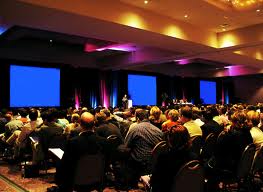
Six months after Hurricane Sandy devastated the Eastern Seaboard and its energy grids, hundreds of the nation’s foremost experts from academia and industry, as well as a number of prominent elected officials and government policy makers, will convene for Advanced Energy 2013 April 30 to May 1 in New York City.

POSITIVE ENERGY

Submitted by ub on

When was the last time you said, "I couldn't be happier" Happiness can be elusive.
It can be fleeting. Too often, it can be lost in our modern world's swirl of stress, multitasking, and 24/7 news and information content. Today you are already thinking about tomorrow.

Positive energy is sure to guide us into greater personal happiness. It show us how we surmount the obstacles that disrupt and diminish our ability to enjoy life to its fullest, with awareness and connection.