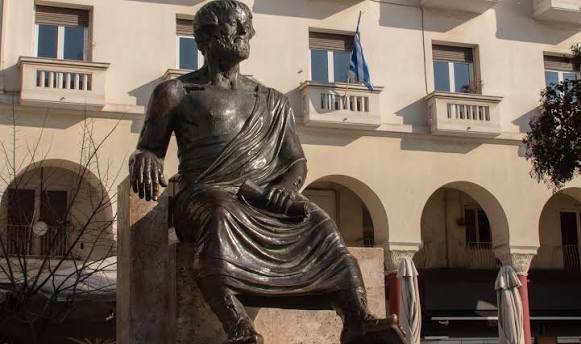
Everyone should agree that our number one soul brother should be listed as the first, the best, and continues to be the greatest.
Over 2,300 years ago, one of the most influential philosophers in Western history wrote extensively about governance, justice, and the dangers of tyranny. His insights remain
Born in 384 BC in the northern Greek town of Stagira, his early life set the stage for one of the most influential philosophical careers in history. At just 17 years old, he moved to Athens to study under the legendary Plato at the Academy. Later, he would go on to tutor Alexander the Great, giving him a front-row seat to both the theory and reality of power.
But this man wasn’t just a scholar; he lived through a period of intense political change. He saw Greek democracy in action, witnessed the fall of the brutal 30 Tyrants regime in Athens, and developed a close relationship with Hermias of Atarneus, a real-life tyrant who ruled a city in Asia Minor. These experiences gave Aristotle a unique perspective on how tyrants rise—and how they cling to power.
Aristotle categorized governments into those that serve the common good and those that serve the ruler’s self-interest. Tyranny, he argued, was the worst form of government—the corrupt version of monarchy.
“A tyrant looks to his own advantage, not to that of his subjects.” — Aristotle, Politics
A tyrant rules not to serve the people, but to serve themselves. And while they may present themselves as saviors of the state, their actions tell a different story.
Aristotle noted clear warning signs in how tyrants typically rise to power:
- From Humble Roots or Low Office: Many tyrants emerge from ordinary backgrounds or minor government roles.
- Champion of the People: They often speak loudly about injustice, presenting themselves as defenders of the “common man.”
- Promises of Radical Change: They exploit people’s frustrations, offering sweeping promises to fix broken systems—often without clear plans.
Sound familiar? These traits remain common among would-be autocrats even today.
Once in power, tyrants rarely give it up willingly. Aristotle described the strategies they use to maintain control at all costs:
- Crushing Dissent: Tyrants silence critics, often through fear, censorship, or violence.
- Fostering Division: They keep people distrustful of one another, making unity—and rebellion—more difficult.
- Controlling Information: By limiting education and free speech, they shape how people think and what they believe.
- Undermining Institutions: Tyrants dismantle checks and balances to centralize power.
It’s easy to think of tyranny as a relic of the past. But Aristotle’s insights remain disturbingly relevant today—especially in times of political instability.
When leaders rise by feeding on division, claiming to be the only voice of truth, and threatening to silence or punish those who oppose them, we should pause—and remember Aristotle’s warnings.
Tyranny doesn’t always arrive with an army. Sometimes, it comes with a smile and a promise to "fix everything."
Aristotle wasn’t just theorizing from a distance—he lived in a time of political chaos, and his observations were born from firsthand experience. His writings on tyranny remind us that freedom and democracy require vigilance,
The Power of a Soul Brother
- Birth and Background: Born in 384 BC in Stagira, northeastern Greece.
- Education: At 17, he moved to Athens to study under Plato at the Academy.
- Influence and Work: He made groundbreaking contributions to fields including politics, biology, metaphysics, and ethics.
- Ties to Power: Personally acquainted with tyrants like Hermias of Atarneus and witnessed key political shifts, including the fall of the 30 Tyrants and the functioning of Athenian democracy.
- Tutor to Alexander the Great: Through this connection, Aristotle had an indirect influence on one of the most powerful rulers in history.
Aristotle distinguished between kingship, oligarchy, democracy, and tyranny—the last of which he regarded as a deviant form of rule. According to him:
- A tyrant rules for personal gain, not for the good of the people.
- Unlike kings, who rule with consent and for the common good, tyrants maintain power through fear, manipulation, and force.
Aristotle observed several patterns in how tyrants come to power:
- Humble Origins or Lower Office: Many tyrants arise from the ranks of commoners or lower-level officials.
- Champion of the People: They often present themselves as advocates for the common people, loudly criticizing existing leadership and corruption.
- Promise of Reform: They appeal to the frustrations of the masses, offering quick and radical solutions to systemic problems.
Once in control, Aristotle noted, tyrants will:
- Suppress Dissent: Silencing opposition through intimidation or violence.
- Create Dependence: Disempowering other institutions or individuals who could challenge their rule.
- Foster Distrust: Encouraging division among citizens to prevent unified resistance.
- Control Information: Manipulating or limiting education and speech to shape public perception.
Aristotle’s analysis serves as a timeless warning about the seductive nature of tyranny and the importance of vigilant, participatory governance. His writings challenge societies to:
- Recognize early warning signs of authoritarianism.
- Protect institutions that enable accountability.
- Uphold civic education and public discourse.
Aristotle’s experiences and deep political insight allowed him to outline the anatomy of tyranny with remarkable clarity. His work not only helps us understand past regimes but also provides valuable tools for resisting similar threats in the present and future.
If you’d like help turning this into a blog post, school paper, slide deck, or video script, just let me know how you’d like to use it.
