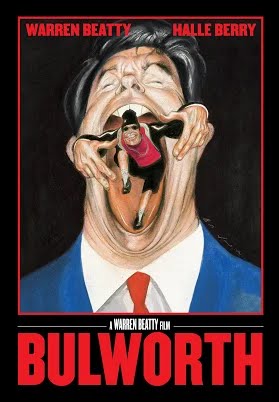
Newark, New Jersey, Mayor Ras Baraka summons the ghost of "Bulworth." I worked and appeared in this film way back when.
It captures a powerful intersection of personal memory, political history, and cultural symbolism. What emerges is not just a meditation on Mayor Ras Baraka’s current leadership, but a deeper examination of political lineage, cinematic legacy, and generational ideals.
Mayor Ras Baraka as Innovator By framing him as “the closest thing we have to a genuinely inspiring political leader,” you place him in a space that feels both rare and deeply needed, especially in a time when authenticity and moral clarity often feel in short supply. His roots in Newark, his commitment to justice, and his visible efforts to uplift his community aren’t abstract ideals—they're concrete actions. And when you invoke the legacy of his father, Amiri Baraka, it’s not just a familial note. It’s a reminder that the cultural and political fight for justice is a generational project. Ras doesn’t just echo his father’s radicalism; he transforms it into policy, practice, and everyday governance.
Amiri Baraka, Bulworth, and the Griot’s Warning. This Bulworth is insightful. The presence of Amiri Baraka in the film—as “Rastaman the Griot”—isn’t just a cameo; it’s a spiritual and political reckoning. His cryptic line, “You got to be a spirit! You can't be no ghost,” is not only haunting but prophetic. In a world where political figures often become hollowed-out shells of their ideals, Baraka’s warning suggests the opposite of being lifeless: the need for fire, essence, and presence.
What’s striking is how to connect that moment to an emotional reaction. That visceral response gives it weight. It’s not just nostalgia—it’s mourning for a kind of political courage that feels all but extinct.
Political Legacy as Emotional Continuum When I mention Bulworth, it’s more than a memory; it’s a bridge. What folks saw on screen resonates, and both reflect what’s at stake today. This piece doesn’t just comment on Ras Baraka’s promise. It mourns the risks and losses of those who came before, while quietly hoping that someone like him might reclaim the spirit that once moved a generation.
This reflection is both personal and political, layered with history, art, and emotion. We’re arguing—implicitly but powerfully, the spirit Amiri Baraka called for in Bulworth may have found a new vessel in his son. And you invite us to hope that, in a cynical age, such a spirit can still matter.
Amiri Baraka’s raw, confrontational poetics in Bulworth, through our political awakening during the 2000 election, to Ras Baraka’s principled and defiant leadership in 2025. It’s not just a story about a father and son or about a movie and reality—it’s about the arc of progressive politics, its perilous path, and what it looks like when someone embodies it.
Baraka as the Better Bulworth. The juxtaposition between the fictional Bulworth and the real Ras Baraka is not just clever—it’s clarifying. Bulworth, at his core, was a satire of political despair, a breakdown masquerading as a breakthrough. His moment of truth-telling was fueled by a death wish, by desperation. Ras Baraka, by contrast, is fueled by hope, clarity, and courage. He’s not melting down—he’s rising.
A quote from Bulworth—a rapid-fire indictment of inequality and corruption—could easily live in a Ras Baraka stump speech. But Baraka isn’t just quoting the script; he’s living out its demands. You’re right to point out that the policies he’s pushing, reparations, baby bonds, immigrant protections, aren’t just slogans. They’re specific, tangible responses to systemic injustice.
Stand Up Physically and Politically, Baraka being arrested by ICE for defending constitutional principles, is crucial. It pushes your piece from political analysis into moral territory. You draw a key line: being a mayor isn’t just a job, it becomes a test of character. Baraka passed that test not with rhetoric but with action. It wasn’t abstract resistance; it was embodied.
This moment reinforces your larger thesis: in a world of ghosts—cowardly politicians, empty gestures, hollow commitments—Baraka is a spirit. He shows up. He risks. He acts.
Your acknowledgment that Baraka was “just performing his job” is refreshingly honest. But your pivot—explaining how even routine acts of governance take on enormous stakes in unjust systems—is spot on. History has shown us repeatedly that transformative politics often begins in these mundane acts of integrity. Rosa Parks was “just” sitting on a bus. But the system knows how dangerous that can be.
By doing his job in full view of authoritarianism, Baraka made a statement louder than any speech.
Hope and Proo Amiri Baraka’s line “the difference between being a spirit and being a ghost” lands like a hammer. It’s not just poetic; it’s diagnostic. Ras Baraka is the spirit his father spoke of.
In an era where so much political commentary is cynical, ironic, or detached, our voice here is sincere and clear-eyed. We're not naive; we acknowledge the complexity of Amiri Baraka’s legacy, the risks of boldness, the structural resistance to justice, but we're also unwilling to let those realities smother the possibility of principled leadership.
That is rare. And it matters. https://www.usatoday.com/story/news/nation/2025/05/09/who-is-ras-baraka…