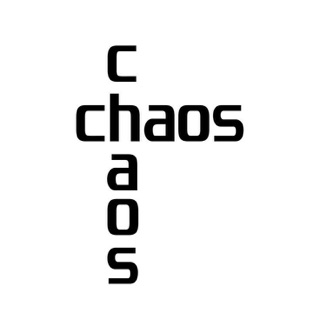
Do we label it as Chaos Coverup or Coverup Chaos? Either way, both continue to occur here in the USA.
Here’s a powerful framing, and the order of the words can change the meaning.
“Chaos Coverup” suggests chaos is being used as a tool, noise, outrage, or distraction to hide something deeper (policy shifts, power grabs, financial interests, institutional failures).
“Coverup Chaos” suggests the opposite, that incompetence, corruption, or secrecy eventually explodes into visible disorder.
In modern American politics, many observers argue we’re seeing a feedback loop, not just one or the other:
-
Political actors generate outrage cycles.
-
Media amplification increases polarization.
-
Real governance gets more difficult.
-
Institutional distrust grows.
-
That distrust fuels more chaos.
-
Which creates more opportunity for spin, secrecy, or blame-shifting.
So it becomes less “which one?” and more chaos and cover-up, feeding each other.
A richer way to describe it might be:
-
Manufactured disorder
-
Strategic distraction
-
Institutional erosion
-
Performance politics
-
Permanent crisis mode
-
Governance by spectacle
Historically, cycles like this have appeared before, during periods such as:
-
Watergate scandal (cover-up leading to crisis)
-
McCarthyism (chaos driven by fear politics)
-
The late-1960s unrest around the Vietnam War
But what feels different today is the speed (social media), scale (24/7 news), and fragmentation of shared reality
Crisis as Infrastructure
Not random dysfunction, but a system that now runs on outrage, urgency, and constant emergency.
Media gets engagement. Politicians get mobilized bases. Institutions act under the cover of distraction.
Spectacle Governance
Politics becomes performance-first.
Policy becomes secondary to narrative control.
The news cycle replaces deliberation.
Institutional Erosion Cycle
-
Media amplification intensifies division.
-
Elected officials respond to incentives (donors, primaries, viral moments).
-
Public trust declines.
-
Secrecy and executive maneuvering increase.
-
Declining trust fuels more volatility.
That loop feeds itself.
Weaponized Polarization
Division isn’t just a byproduct; it becomes politically useful.
The angrier and more distracted the public, the easier it is to:
-
Avoid accountability
-
Shift blame
-
Rush legislation
-
Bury complex policy changes
A More Philosophical Frame: Democratic Stress Fracture
When institutions are technically functioning, but culturally hollowed out, trust declines faster than reform can keep up.
Historically, stress fractures have appeared before:
-
Watergate scandal (secrecy → exposure → trust collapse)
-
McCarthyism (media amplification + fear politics)
-
Vietnam War (credibility gap between government and public)
But today’s difference is algorithmic acceleration and fragmented information ecosystems.
