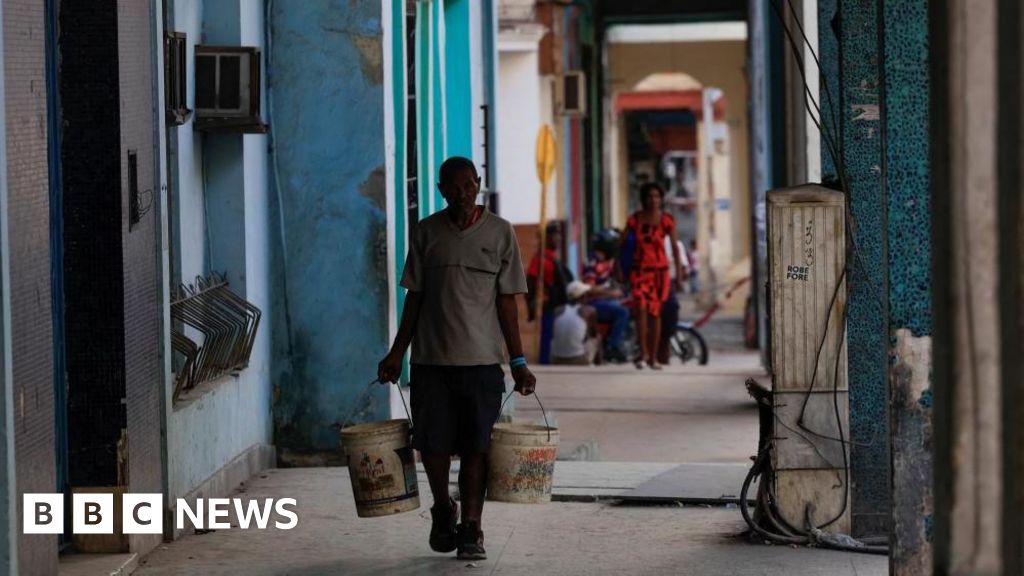
What I Carried From La Habana, Cuba, and What I remember living upon a Hill Overlooking El Bosque.
I grew up on Calle San Antonio, in a house at the top of a hill overlooking El Bosque de la Habana... the green corridor of trees and river that Havana still calls its lung today. From that hill, as a boy, I could see the whole city breathing. I didn't know yet that I'd spend the rest of my life carrying that view with me, because I'd never get to stand on that hill again.
My family lived through two Cuban dictatorships, not one. First Batista, then Castro, who promised something better and delivered something worse... a state built on fear and intimidation of its own people, dressed up as liberation. By the time we left, we left everything: bank accounts, properties, the house itself. We walked away from a life so that we could keep something Castro couldn't take... our own judgment about what was true.
My uncle, Osvaldo Soto, didn't walk away quietly. He fought at the Bay of Pigs with Brigade 2506, and later co-founded SALAD, carrying the exile's fight into new form. I carried it differently... into a microphone. Years later, I stood at Fort Chaffee, Arkansas, reporting as thousands of Cuban refugees arrived during the Mariel boat-lift of 1980, watching another generation of my countrymen make the same walk away from the same regime, for the same reasons.
I'm told our home became the Czech embassy. I've never been able to confirm it with a photograph... some pieces of a story like this live only in memory, not in a search result. But I believe it, because that's what happened to so much of what we left behind. Cuba redistributed our absence before we'd even finished grieving it.
Here in the United States, I've watched a different kind of confusion take hold... a civic and political illiteracy so widespread that studies from the U.S. Chamber of Commerce Foundation find most Americans fail basic civics and economics tests, even while most of them believe they understand how government works. I watch the word "communism" thrown around as a catch-all for anything resembling government involvement, often by people who never had to watch it work the way I did, up close, with fear as its primary instrument. That confusion matters to me, because I paid a real price to understand the difference between rhetoric and the real thing.
My father, Antonio J. Soto, taught me that winning and losing mattered less than how you played, and whether you could accept the outcome once the whistle blew. I've carried that lesson through newsrooms, through federal service helping launch TV Martí, through every version of the story I've told since. It's a lesson about integrity, and integrity, I've learned, is the one thing dictatorships and mob rule alike try hardest to take from you.
I couldn't bring the house back. I couldn't bring the hill, or the trees of El Bosque as I remember them, or the version of Havana that existed before either dictator got to it. But I carried the lesson. And now I'm passing it to my grandchildren, the way my father passed it to me... not as nostalgia, but as instruction.