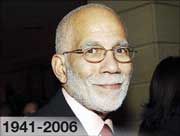
Ed Bradley and I shared similarities and a brief yet meaningful history that has stayed with me throughout my news career.
Bradley was not always destined for a career in journalism. With his university degree, he became a teacher, while volunteering and also working in radio. After he stopped teaching, he joined WCBS radio as a reporter. He was a big man with a bigger heart.
As a graduate student researching minorities in media, I had the privilege of interviewing him for my thesis. Even then, he was generous with his time and thoughtful in his responses. He understood the weight of representation and spoke with the quiet authority of someone who had not only witnessed history but helped shape it. Ed Bradley and I also worked in local radio, covered race riots, and shared our passion and attraction to Jazz music.
Years later, I unexpectedly ran into him on Broadway after one of my journalism lectures while working as a distinguished visiting professor at NYIT. He greeted me warmly, with that familiar calm presence and understated charisma that defined him. There was no indication that he was gravely ill. True to form, he carried himself with dignity, grace, and strength.
Shortly thereafter, I was offered an endowed professor position teaching journalism at ASU, an American HBCU, where I often lectured about his extraordinary career. I spoke of his groundbreaking work on 60 Minutes, his fearless reporting, and the doors he opened for minority journalists like myself. But beyond his many accolades, I emphasized his humanity, his willingness to mentor, to listen, and to stand firmly in his truth.
Ed Bradley’s legacy is not only etched in the history of broadcast journalism; it lives on in classrooms, in newsrooms, and in the aspirations of students who see in him a reflection of what is possible. I am grateful for our encounter, for his example, and for the path he helped clear for so many of us who followed.
His voice may be silent, but his impact speaks volumes.