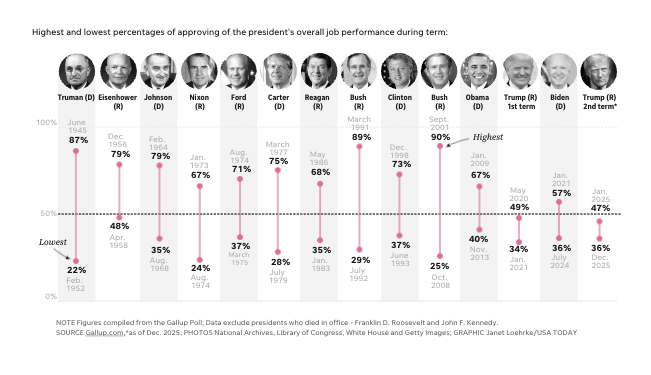
Presidential approval ratings, long considered a measure of public sentiment toward the nation’s leader, will no longer be tracked by Gallup, the polling organization announced on 2/11/2026.
The decision ends a prominent tradition of measuring presidential popularity that began in 1938 during Franklin D. Roosevelt's administration and continued through Donald Trump’s presidency.
Gallup stated it will cease publishing approval and favorability ratings of individual political figures starting this year.
The move “reflects an evolution in how Gallup directs its public research and thought leadership,” the company said in a statement to USA TODAY. Presidential approval ratings have long been closely watched indicators of political strength and public confidence, often influencing campaign strategies, legislative negotiations, and historical evaluations of presidents. Gallup did not specify whether other organizations will fill the gap left by its departure from this longstanding polling tradition.
Meanwhile, voters across the political spectrum feel that way at times, whether they’re upset about government spending, public safety, cultural issues, leadership conduct, or political gridlock in places like the United States. The feeling that leaders act irresponsibly or immaturely can erode trust and make people feel powerless.
As for “how much is enough?”, in a democratic system, that line is ultimately determined by voters. Accountability typically comes through:
- Elections (local, state, and federal)
- Primaries, where parties choose their nominees
- Civic engagement (town halls, organizing, peaceful protest)
- Independent media and oversight
- Checks and balances are built into the constitutional system