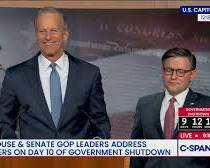
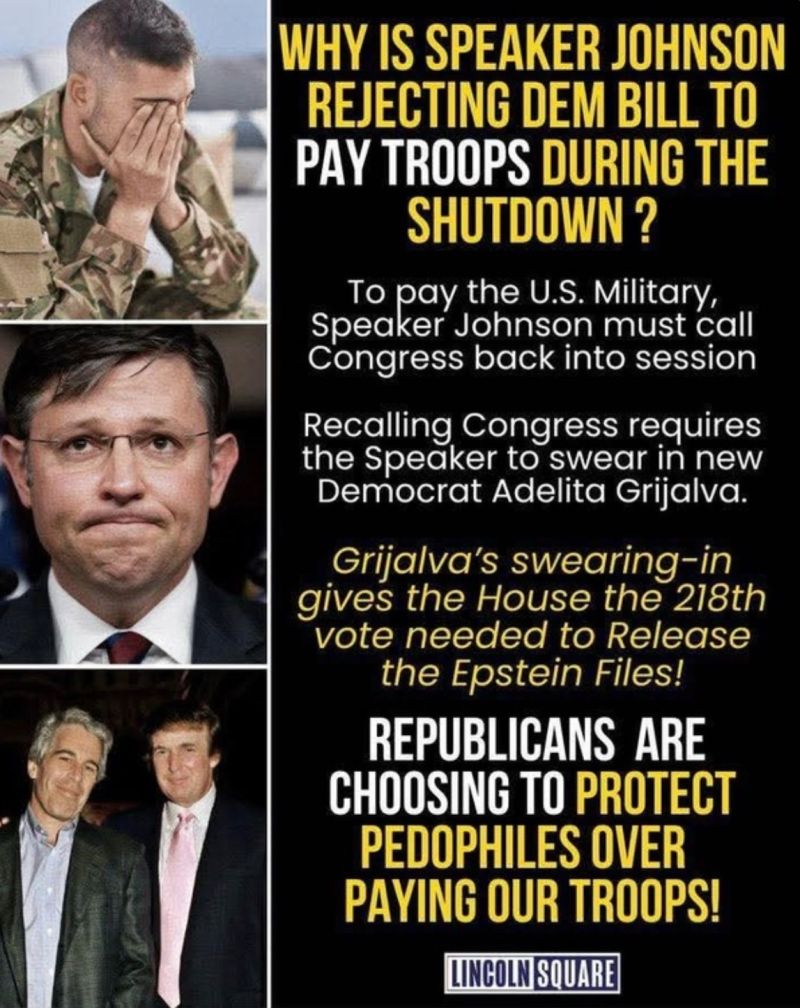
The incredibly shrinking US House Speaker and Republican leader little Mikey Johnson continues to shrivel and lose GOP support.
- Speaker Mike Johnson has secured a second term as Speaker of the House in 2025 with strong backing from former President Trump.
- During his first term, he faced criticism from Reps. Ralph Norman (R-S.C.) and Keith Self (R-Texas) — but both eventually supported him for re-election.
- The only GOP defection in his second bid came from Rep. Thomas Massie (R-Ky.), who has been consistently critical of Johnson's leadership during the 119th Congress.
- Amid a government shutdown, Rep. Marjorie Taylor Greene (R-Ga.) has emerged as a key critic, particularly targeting Johnson for:
- Not reconvening the House.
- Failing to present a plan regarding Affordable Care Act (ACA) subsidies.
- Stalling legislative progress during a critical time.
- Government Shutdown: Ongoing, with concerns about the lack of congressional activity.
- ACA Subsidies: Greene and others are pressing Johnson for clarity on GOP intentions regarding healthcare policy.
- Party Unity: While Johnson has maintained broad support, cracks are visible, particularly with libertarian-leaning members like Massie and hardliners like Greene.
Johnson’s Leadership & GOP Dynamics
Support from Trump & the GOP Mainstream
- Trump’s endorsement was likely pivotal in securing Johnson’s second term. His backing ensures that Johnson has the support of the pro-Trump faction, which remains dominant in the GOP.
- Despite previous criticism, Reps. Norman and Self falling in line suggests that most of the party is prioritizing unity — at least publicly.
Cracks in the Caucus
- Rep. Thomas Massie’s lone dissent isn’t just symbolic; it signals frustration from the libertarian/anti-establishment wing of the party. Massie has often opposed party leadership on issues like spending and surveillance.
- Rep. Marjorie Taylor Greene’s sharp criticism reflects dissatisfaction from the far-right, populist faction — especially when the leadership doesn’t push aggressive conservative policy or appears inactive.
👉 Takeaway: Johnson is walking a tightrope — balancing mainstream GOP priorities with demands from the party's right flank, many of whom expect bolder moves (like defunding programs or targeting Biden policies).
Legislative Paralysis During the Shutdown
Why the Government is Shut Down
- The shutdown indicates that Congress failed to pass necessary funding bills. The reasons likely include:
- GOP infighting over spending cuts.
- Disagreements with Senate Democrats and the White House.
- Controversies over Ukraine aid, border security, and ACA-related funding.
Johnson’s Inaction Under Fire
- Not calling the House back into session during a shutdown is rare and controversial. It gives the impression of legislative negligence — especially when urgent issues (like federal worker pay, food assistance, and national parks) hang in the balance.
- Greene and others want visible leadership — aggressive hearings, bills, and messaging to show they’re fighting the shutdown on GOP terms.
👉 Takeaway: Inaction hurts Johnson politically — it gives critics room to claim he’s not in control or not using his power effectively. For hardliners, that’s unacceptable.
The ACA Subsidy Flashpoint
What’s at Stake:
- ACA (Obamacare) subsidies help lower-income Americans afford health insurance.
- These subsidies were expanded during COVID, and there’s a debate about whether they should continue at current levels.
Greene’s Criticism:
- She’s accusing Johnson of having no plan, which echoes conservative frustration with “governing by drift” — i.e., letting Democratic policies continue without a clear GOP alternative.
- The far-right wants a repeal or dramatic restructuring of the ACA, but Johnson seems hesitant to reopen that battle without a solid political strategy or majority support.
👉 Takeaway: Healthcare remains a politically dangerous issue for the GOP — repeal efforts have repeatedly backfired in past elections. Johnson may be cautious for that reason, but it’s costing him with the hard right.
What Happens Next?
Likely Scenarios:
- Johnson calls the House back — under pressure, he may reconvene to show action and control the narrative.
- Temporary funding deal — possibly with Democratic votes, which would enrage the right further.
- GOP infighting escalates — if Johnson doesn’t assert stronger leadership or satisfy his critics, another motion to vacate (like McCarthy faced) could arise, though many Republicans may avoid that chaos.
Bottom Line:
- Johnson’s Speakership is relatively stable — for now. But criticism from Greene, Massie, and others shows that dissatisfaction is bubbling.
- The shutdown is a major test. Johnson’s next moves will determine whether he can unite the party and restore momentum — or if he’ll face the same instability that ended McCarthy’s speakership.
- Policy paralysis is risky. Failure to act on issues like ACA subsidies or government funding makes the GOP look ineffective — something Democrats will use in 2026 races.
Links
The 24/7 go to location when you need to learn what`s going on around you and in all corners of the world. Dose Of Feeds shows you the latest breaking news stories from multiple sources on a single page.
Topic