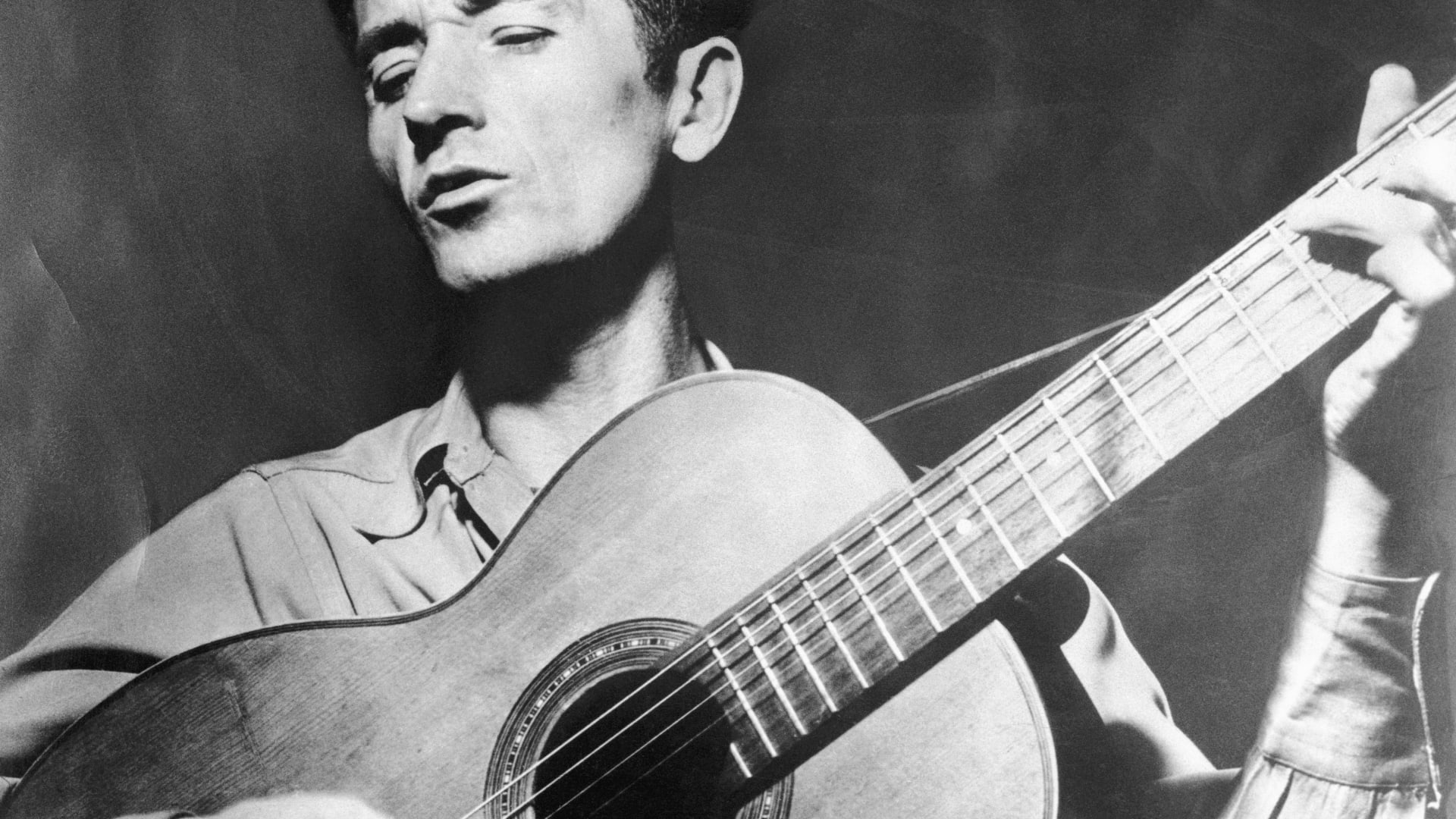
On February 23, 1940, Woody Guthrie wrote his iconic folk anthem "This Land Is Your Land" in his room at the Hanover House Hotel in New York City. Written in response to Irving Berlin's "God Bless America," the song became a defining, counter-narrative folk protest song, celebrating American, everyday people while challenging economic inequality., aka affordability.
His anthem Original Title/Concept: Initially titled "Little Darling Pal of Mine" and later "God Blessed America," the song was a response to what Guthrie felt was an overly simplistic, romanticized view of the country.
- Context: Written during the Depression-era, it highlighted the struggles of ordinary Americans, with original verses containing more critical, political messages.
- Recording: Although written in 1940, Guthrie did not record "This Land Is Your Land" until November 1944.
- Legacy: It was selected by the Library of Congress for the National Recording Registry and is considered one of the most essential American folk songs.
Woody Guthrie wrote songs about Donald Trump's father, Fred Trump, in the 1950s, most notably "Old Man Trump," exposing his racist housing practices in Brooklyn's Beach Haven complex, where Guthrie was a tenant; these lyrics, discovered decades later, reveal Guthrie's condemnation of the elder Trump's discriminatory policies, inspiring modern protest versions by artists like Ani DiFranco and Tom Morello.
The Discovery:
In 2016, Guthrie scholar Will Kaufman found handwritten lyrics in the Woody Guthrie Archives detailing Guthrie's experiences as a tenant under Fred Trump.
The Song:
"Old Man Trump" directly criticized Fred Trump's discriminatory renting policies, particularly regarding race, with lyrics like "No, no, no! Old Man Trump! Old Beach Haven ain't my home!".
Context:
Guthrie lived in Beach Haven in the early 1950s and detailed his frustration with the racist environment created by Trump's management.
Modern Relevance:
The discovery resurfaced during Donald Trump's presidential campaign, with artists recording contemporary versions to highlight the historical connection and Guthrie's anti-racist stance.
His songs endured for over eight decades, frequently covered by artists like Bob Dylan and Pete Seeger, and remains a staple in American culture.
