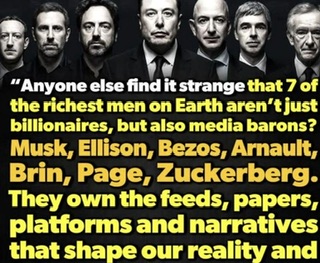
Please keep in mind that Americans have been here before, let’s hope we learn something from our mistakes.
We’ve lived through an era in which wealth concentrated at the top with dizzying speed while ordinary citizens felt the ground shifting beneath them. We’ve watched as corporations treated communities as expendable, as public institutions bent under private influence, and as the political system developed a kind of allergic reaction to accountability. That period became known as the Gilded Age, an era glittering on the surface but corroded underneath.
Today, we are experiencing its sequel. Despite unprecedented national wealth, millions of Americans feel they are working harder for less stability. Housing is increasingly out of reach. Healthcare is still a maze of unaffordable decisions. Wages cannot keep pace with the cost of living, and the ladders of mobility, education, homeownership, small business formation, have grown rickety. Meanwhile, money sluices through politics with an intensity that would make even the 19th-century railroad barons blush.
The result is a country that looks prosperous on paper, but where prosperity is more theory than reality for the people who keep it running. This isn’t simply an economic problem. It’s a democratic one.
A society where a small slice of citizens holds outsized political power cannot sustain the idea that government derives its legitimacy from the consent of the governed. When political outcomes are shaped less by votes than by the strength of donor networks, the public rightly begins to doubt whether the system is still theirs to influence. Cynicism takes root. Disengagement grows. And the hard work of self-government, the civic glue that holds a diverse nation together, begins to fray.
Ending this new Gilded Age doesn’t require tearing the system down; it requires repairing what we’ve allowed to erode.
It means:
- Rebalancing economic power so that productivity gains lift workers, not just shareholders.
- Reforming campaign finance so that elections are shaped by constituents, not checkbooks.
- Investing in public goods schools, infrastructure, research that create long-term value rather than short-term profit.
- Restoring guardrails around monopolies and mergers to ensure markets remain competitive rather than captured.
None of this is radical. In fact, it’s profoundly traditional. The United States has a long history of correcting imbalances when power drifts too far from the citizenry. The Progressive Era, born in response to the original Gilded Age, didn’t reject capitalism or democracy. It strengthened both by insisting that they serve the public good.
The same opportunity stands before us now.
The anger across the political spectrum today is not a sign that Americans have given up. It’s evidence that they still care, that they recognize something essential slipping out of reach and want it back. Beneath the noise, the protests, the populist movements on the right and the left, there’s a shared, unmistakable desire: to restore a country that works for ordinary people again.
That starts by remembering who this nation is supposed to belong to.
Not the wealthiest donors.
Not the most powerful corporations.
Not the loudest personalities.
But We the People, the first three words of our founding document and the last group whose interests should ever be an afterthought.
We ended the Gilded Age once. We can end it again.
And in doing so, we can return this country to its rightful owners: the citizens who built it, sustain it, and deserve a future shaped not by privilege, but by possibility.