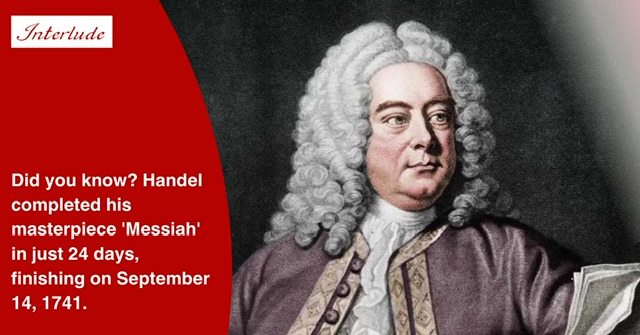
Messiah has thrived for nearly 300 years in so many versions and venues. It isn’t just great music (though it certainly is!), but also how the work itself was conceived and how it lives in performance. Wikipedia +1 🎼
It is beautifully written — and for many kinds of performers Handel’s Messiah balances choral power, solo lyricism, and dramatic energy in a way that’s both accessible and profound. The mixture of recitatives, arias, and choruses gives something for everyone — singers, listeners, amateurs, and professionals alike, to engage with musically and emotionally. Why So Famous And of course, the Hallelujah Chorus with its bold harmonies and uplifting energy has become iconic in Western music. Wikipedia
Handel himself reshaped the piece many times. Handel didn’t think of Messiah as a fixed monument. He revised it constantly, creating multiple versions during his lifetime to suit different choirs, orchestras, venues, and singers. That fluidity set a precedent that made the work adaptable from the start. Interlochen Public Radio +1 There is no single “correct” version that everyone feels bound to — which is why you see so much variety in performances, from very small ensembles to huge choirs. Squarespace
It invites participation. Part of Messiah’s magic is that it’s a living tradition. Many communities perform it yearly; some host sing-alongs where the audience joins in. Both professional ensembles and amateur choirs adopt it as a centerpiece of their season. Handel and Haydn Society. This communal aspect — people doing the work, not just listening — is a huge part of its resilience. Calvin University
It’s both specific and universal. Though the text is drawn from Bible passages organized around Christ’s birth, death, and resurrection, many find the music’s sense of uplift and emotional clarity inspiring even outside strict religious contexts. That’s helped it spread across cultures and settings — from sacred to secular halls. Encyclopedia Britannica
It’s adaptable in style and scale. Over the centuries, Messiah has been reorchestrated (even by Mozart!), expanded, shrunk, and reimagined. Some performances aim for a historically informed Baroque style, others go for big and dramatic with large forces, and both can feel right depending on context. Wikipedia +1
There’s no mystery in saying Handel knew how to write; his craftsmanship, melodic invention, and dramatic pacing are part of why Messiah works so well. But its longevity also comes from its flexibility, its universal appeal, and the way musicians and audiences have made it their own over centuries. Those factors together explain why you can hear it in so many versions, from our performance with the Hudson Choral Society to symphony halls around the world.
https://m.youtube.com/watch?v=2-QV_I-xseA&list=RD2-QV_I-xseA&start_radi…