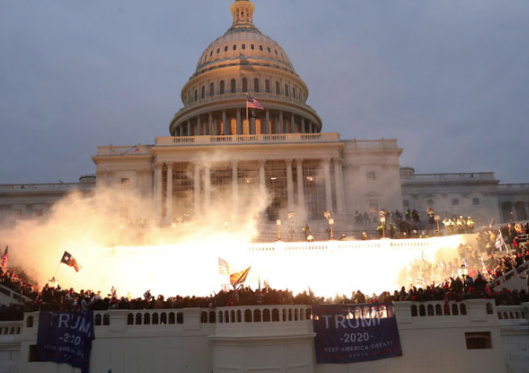
On January 6th, the joint session of Congress to count electoral votes is set by federal law, not the US Constitution.
The current date is specified in the Electoral Count Act of 1887 (most recently updated by the Electoral Count Reform Act of 2022, which mandates that Congress meet "on the sixth day of January succeeding every meeting of the electors".
The Constitution itself, specifically the Twelfth Amendment, only requires that the votes be counted in a joint session of Congress, with the Vice President presiding in a ceremonial role. It leaves the specific timing to be determined by Congress through legislation.
Congress determined the January 6th date (and previously other dates, such as in February) for several practical reasons:
- Establish a Clear Timeline: The law creates a clear, fixed timeline for the post-election process, including deadlines for states to finalize their results (the "safe harbor" date in December) and for the transmittal of electoral votes to Washington, D.C. This structure is designed to ensure a definitive and timely end to the election process before Inauguration Day on January 20th.
- Resolve Disputes Before the Count: The dates are coordinated to allow time for states to resolve any potential election disputes and for legal challenges to be concluded before the congressional counting session, thereby minimizing the potential for controversy during the joint session.
- Avoid Lame-Duck Sessions: With the ratification of the Twentieth Amendment, which changed the start of the new Congress's term to January 3rd, counting the votes on January 6th ensures that the process is handled by the newly sworn-in, rather than the outgoing, Congress.
- Historical Precedent and Stability: The date provides a long-standing, predictable framework for the formal counting of votes, which has historically been a routine, ceremonial event and a final step in the peaceful transfer of power.
The date is not an unchangeable constitutional requirement and has been modified by law several times when January 6th fell on a Sunday or for other reasons of convenience
Meanwhile.
January 6 is the Epiphany on the Christian calendar, but Congress didn’t choose the date for religious reasons. The timing comes from law, tradition, and constitutional mechanics.
Here’s how it came to be:
1. The Constitution sets the process, not the feast day
The 12th Amendment (ratified in 1804) requires Congress to meet to count Electoral College votes, but it doesn’t specify a date. It leaves that to statute.
2. Federal law fixed the date as January 6
In 1887, after the chaos of the disputed 1876 election, Congress passed the Electoral Count Act. That law set January 6 as the day Congress would meet to certify electoral votes, unless Congress chose a different day.
3. Practical timing after the election
January 6 falls:
- After states finish certifying results
- After electors meet in mid-December
- Before the presidential inauguration on January 20
It provides a predictable window that fits the transition of power.
4. Epiphany was incidental, not intentional
While Epiphany is significant in Christian tradition—marking revelation, recognition, and truth made visible—there’s no historical evidence that Congress chose January 6 because of its religious meaning. In a country with a strong commitment to church–state separation, the overlap was coincidental.
5. The irony of history added later
In hindsight, the symbolism feels unavoidable: Epiphany is about revelation, yet January 6, 2021, became a day of denial and deception rather than clarity. That contrast is poetic—but accidental.
In short: Congress chose January 6 for administrative and legal reasons, not theological ones. Any symbolic resonance came later, shaped by history rather than intent.
Epiphany is the Christian feast day observed on January 6 that celebrates revelation—the moment when Jesus is revealed to the world as divine.
At its core, Epiphany means “manifestation” or “showing forth.” The word comes from the Greek epiphaneia, meaning appearance or revealing.
What Epiphany commemorates
Different Christian traditions emphasize different moments:
- The visit of the Magi (the Wise Men)
In Western Christianity, Epiphany marks the arrival of the Magi to Bethlehem, guided by a star, recognizing Jesus as king. This moment symbolizes that Christ is revealed not only to Jews, but to Gentiles—to the wider world. - The baptism of Jesus
In Eastern Christianity, Epiphany (often called Theophany) focuses on Jesus’ baptism in the Jordan River, when God’s voice declares him beloved, and the Holy Spirit appears as a dove. - The miracle at Cana
Some traditions also connect Epiphany to Jesus turning water into wine—his first public miracle.
All three moments share the same theme: identity revealed, truth made visible.
Why it matters
Epiphany is about:
- Recognition and awakening
- Light breaking into darkness
- Seeing what was present all along but not yet understood
It’s the moment when belief shifts from rumor to recognition.
Cultural traditions
Epiphany is widely celebrated around the world:
- Three Kings Day in Spain and Latin America
- King Cake in New Orleans
- Blessings of homes in many European traditions''
Finally, one spiritual scholar explains it as the Doctrine of the late Ukrainian Helena Blavatsky and Millenarianism.